News
5 MIN READ
January 16, 2026
Andrew Santino’s Golf Swing Is No Joke
After kicking off season two of Vanity Index, we broke down Santino’s swing and the timing that makes it work—or fall apart.

There's two things in my life I am a massive nerd of: golf and stand-up comedy. Andrew Santino falls perfectly in the middle of that Venn diagram.
Stand-up and golf actually have a lot in common. Both on stage and on the course, you’re out there alone. Success depends on the work you put in beforehand, the practice for the "performance" when it matters most. Whether it be hitting the range or an open-mic, there is a proving ground to test what works and what doesn’t. Santino may not be grinding open mics anymore, but the mindset translates.
I know I'm not alone in expressing how entirely fun it has been to watch Santino make his way into the golf sphere the last few years. His podcast No Bad Lies has become a mandatory stop for golfers and athletes alike, mixing interviews, on-course games and just enough chaos to keep the popcorn flowing week after week.
I’ve seen a lot of Santino’s swing lately and at its foundation, it’s good. But much like comedy, it relies heavily on timing. When everything syncs up, it works. When it doesn’t, things can unravel quickly.
This week on the season two premiere of Vanity Index (now on airing Golf Channel each Wednesday), Santino chatted about his dislike for overly manufactured motion on the course. “I hate when guys add stuff just to look like golfers,” he joked on the pod.
His swing reflects that mindset. It’s simple. Maybe too simple at times. But there’s an honesty to it. He doesn’t create movement just for the sake of it.
“When I’m loose, it’s great,” he said. “When I start thinking too much, it all kind of falls apart.”
That shows up in his swing. When everything syncs up, the ball jumps. When it doesn’t, he’s relying on feel and fast hands to save it.
Let’s break it down frame by frame and see where he can clean things up to make the swing more repeatable.
More Celebrity and Athlete Golf Swing Breakdowns:
Address:

Good place to start a swing from. Love how natural his arms hang naturally and aren’t reaching for the ball—always a good sign.
His lead foot is flared slightly open, which I love. It encourages rotation through the ball and makes it easier for the body to keep moving instead of stalling out.
Backswing:

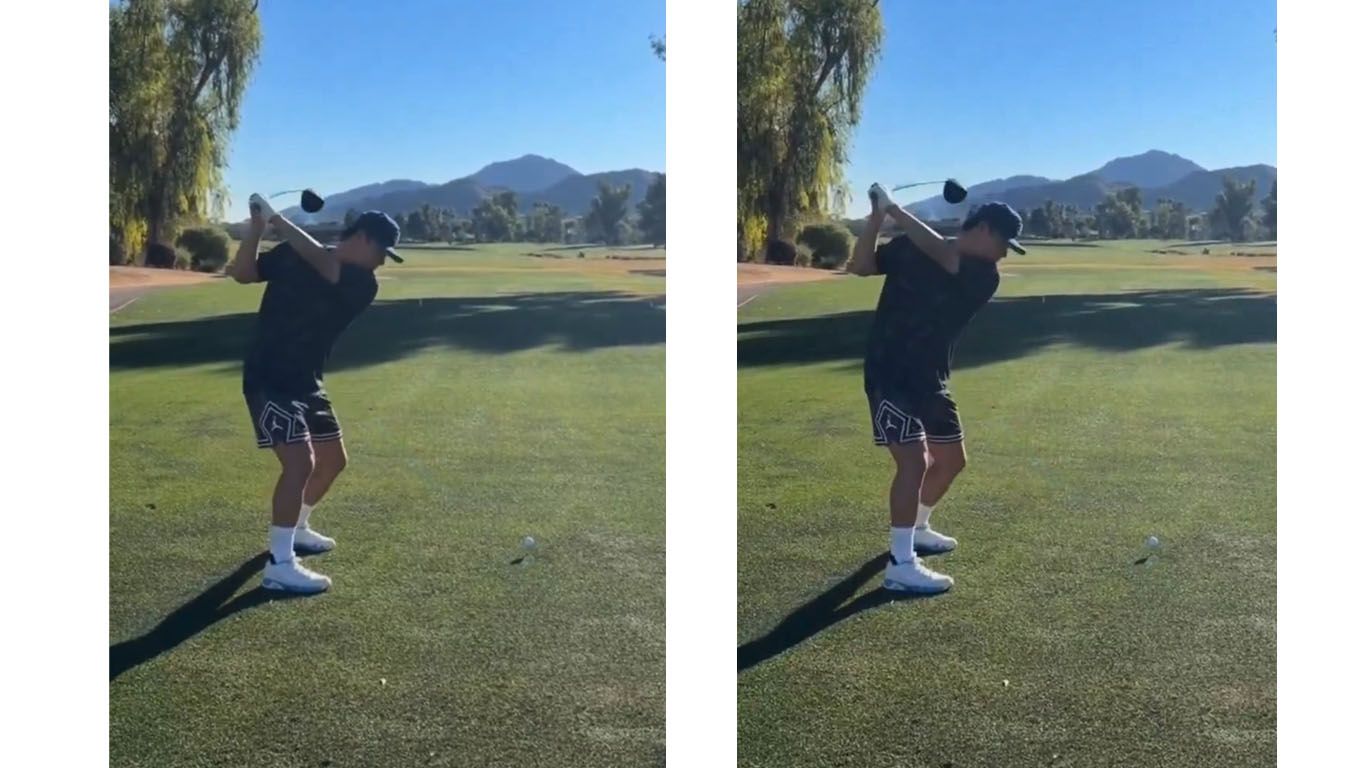
His arms turn back on plane, but he rolls his wrists early which causes the club to get behind him. Why does this matter?
When the club gets “behind” him, it makes it tougher to get the club back in front of him at impact.
It opens the clubface more than necessary.
It's not the end of the world, Jon Rahm actually moves his hands similarly going back. It’s just going to require more work to square the club up later.
Top of backswing:

He rotates nicely up to the top, getting a nice full turn with both his upper and lower body.
Take note of the trail leg—he maintains knee flex instead of locking it out, which is huge for transferring pressure in the downswing. This is something to watch for in your own swing videos (or incorporate into your swing thoughts).
Pre-Impact:

When looking solely at the position of the club, he gets it back out in front of him nicely. However, there is very little lower body rotation. You can see his belt buckle is pointing perpendicular to his target, showing that this swing is heavily reliant on his upper body, namely his arms and hands.
Ideally, we want to see his left hip clear out of the way first, with the upper body following. That sequence helps square the face naturally—without needing to flip the hands at the ball.
Impact:
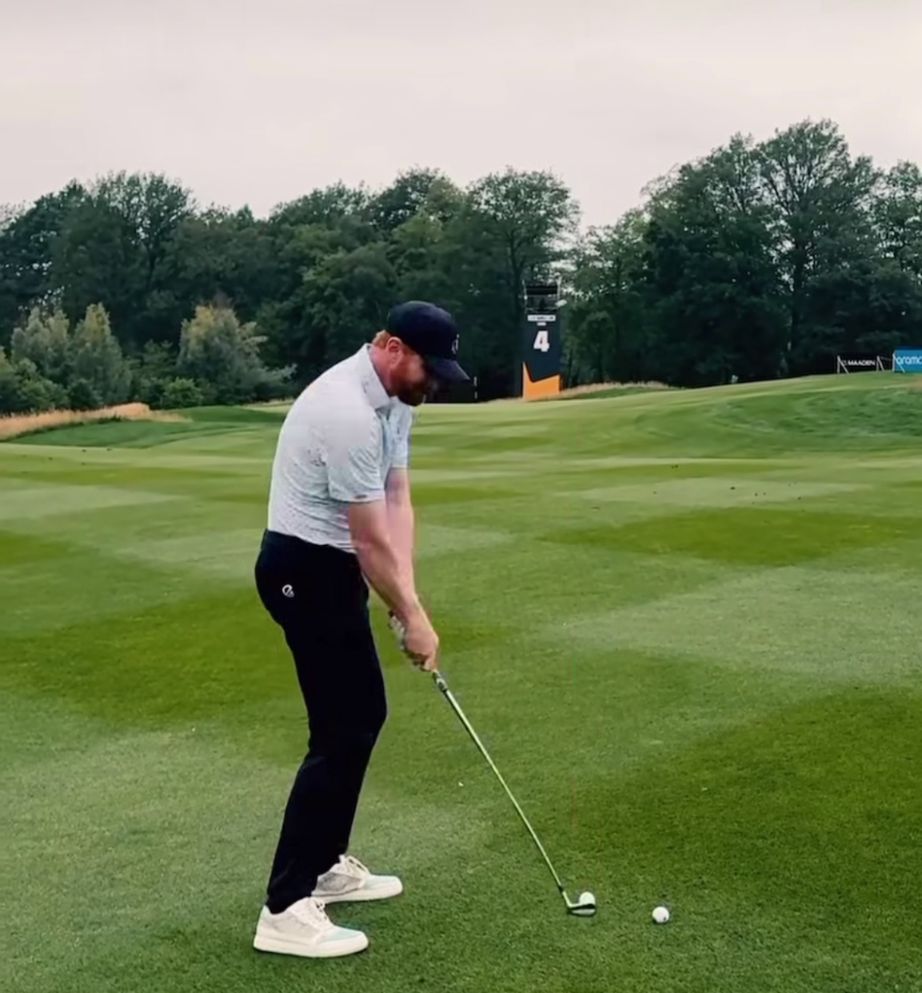
Head to the next frame and you see the right hand go to work, and still with minimal rotation from the lower half. This is still technically what you would consider a “stuck” position, but I don’t hate it.
A quiet lower body isn’t ideal, but not all movement is good movement either. Many golfers fire their hips toward the ball, creating even less space. Santino avoids that. He maintains posture and lets his hands and arms work together.
Post-Impact:

More of the same with the hands and lower body. With a swing this hand-driven, when the timing is on, he’s going to hit a lot of good shots.
“Once I feel rushed, that’s when things go sideways,” Santino told Vanity Index hosts Chad Mumm and Wells Adams.
In golf terms, that’s a swing that lives on timing. When he’s comfortable, his hands work. When he’s rushed, there’s less margin for error.
Follow-through:

Everything finally catches up, and he finishes balanced. That’s always a sign of someone who can play.
Final thoughts:
When watching his swing on video in real time, you can tell Andrew Santino is a good golfer. He makes proper contact and from the tracer, the ball flies straight. It’s when you break it down frame-by-frame where the small things begin to stand out.
Santino put it best himself: “Feel gets you a long way… until it doesn’t.”
A little less hands in the backswing, and a little bit more hips in the downswing, and he is going to pick up a lot of distance, reduce reliance on timing, and produce a more consistent ballflight.
Timing, comedic or golf-swing related, really is everything. And the less you have to rely on perfect timing, the more consistent the results.
Vanity Index Podcast airs every Wednesday on Golf Channel at 10AM EST. Listen to this Episode with Andrew Santino on Spotify or Apple Podcasts.
More Celebrity and Athlete Golf Swing Breakdowns:

JOIN OUR NEWSLETTER
Get our top stories in your inbox, including the latest drops in style, the need-to-know news in pro golf, and the latest episodes of Skratch’s original series.