News
14 MIN READ
June 15, 2026
Carnage at the Carnival: Revisiting the 2004 U.S. Open at Shinnecock Hills
The golf course is a talking point at every United States Open, but this week it will be an obsession. To understand what’s at stake, it is instructive to look back to '04 and ask: How did it all go so wrong?
At this U.S. Open you will hear a lot of references to Shinnecock Hills dating to 1891. That is wrong. This incarnation of Shinnecock Hills is only 22 years old. That’s because June 20, 2004 is the day that Shinnecock died.
The final round of the 2004 U.S. Open lives on in infamy, as a perfect storm of bad luck and bad planning led to dead greens and nearly unplayable conditions. Reputations were shattered and careers altered. Retief Goosen’s spot in the Hall of Fame owes much to his unflappable victory. Ernie Els was tied for second heading into the final but shot 80 and was reduced to wanting to brawl with spectators. Phil Mickelson played the best golf of his life but was thwarted by the impossible course, beginning his cold war with the USGA that finally boiled over with a churlish act of civil disobedience at the 2018 U.S. Open…when again the green speeds at Shinnecock got out of control.
The golf course is a talking point at every U.S. Open, but this week it will be an obsession. Twenty two years after Shinnenock died, can the USGA avoid another calamity? Will their setup folks overreact and neuter one of golf’s great tests? The tournament hasn’t even started and already nerves are frayed. To understand what’s at stake, it is instructive to look back to 2004 and ask, How did it all go so wrong?
2004
It’s easy to forget now, but the opening rounds of the ‘04 U.S. Open featured record low scores on a par-70 weighing in at a modest 6,996 yards. Just one player had broken par at Shinnecock in the 1986 or ‘95 national championship so USGA setup guru Tom Meeks showed a little mercy with the first round pin placements this time around. Fifteen players shot under par, with 50 year-old Jay Haas among the leaders at -4. Then a Thursday evening shower softened Shinnecock even more. Mickelson fired a bogeyless 66 to push the lead to -6. The course was playing so easy that Vijay Singh, in a tie for 8th place, woofed, “Hopefully the wind picks up a little bit.”
The USGA was plainly offended by the low scores and the players’ insouciance. The greens were starved of water overnight, and then the wind finally arrived on Saturday. By that afternoon, the putting surfaces “looked like someone took a Bunsen burner to them,” according to Rick Smith, Mickelson’s then swing coach. A couple of caddies were seen spiking golf balls into the practice putting green and the balls bounced head-high.
The par-3 7th hole, with its Redan green pitched away from the tee, became a flash point. Though it was playing a manageable 189 yards, only 18 of 66 players were able to hold the green with their tee shot. The average score was 3.49 and the carnage included Mickelson’s double bogey, which began with an 8-iron that landed in the heart of the green but just rolled off the back. After a delicate chip his 10-foot par putt trickled by the hole, wavered, wiggled, just about stopped, started up again and then meandered 20 feet past. He missed the comebacker. Asked later if the hole was fair, a visibly peeved Mickelson shot back, “What do you think?”
Els answered the question more directly: “This isn’t golf. It’s crazy.”

Saturday night is when things went off the rails, as a big windstorm tore through the Hamptons. “The wind blew 30 and 40 miles an hour,” says Jim Furyk, the defending U.S. Open champ in 2004. “It was rattling the house I rented.”
The greens were utterly torched by Sunday, what turned out to be the hottest day of the week. But the USGA still chose a front right hole location on number 7, on the steepest part of the green. One of the first groups to come through was J.J. Henry and Kevin Stadler. Henry had a 12-footer to save par but missed the hole and his ball trickled into the back bunker. Stadler had a three-footer on the same line; incredibly, his ball also wound up in the sand. Each player took a triple bogey 6.
You’re not going to believe this…they’re going to have to stop the U.S. Open.
Bad news travels fast. “I was in the tower about half an hour or so before we went on air,” says NBC’s Dan Hicks. “Johnny [Miller] completed his little trek around the golf course where he’s looking at the hole locations and just checking things out, and he comes up to the tower, and he’s just unusually out of breath and excited as if he just saw something that he can’t believe he saw. So, I’m like, what’s going on? He says, ‘You’re not going to believe this…they’re going to have to stop the U.S. Open. I watched the first three groups go through and there’s no way they can keep it on the green.’ And David Fay was in the tower with us, because at the time he was our rules guy in there with us as the executive director of the USGA, and his radio starts crackling, and it’s all becoming this scene of like, Oh, my God, this is crazy. I don’t know if anybody’s ever seen anything like this, heard anything like that.”
Asked to describe the greens, Goosen offered only one word: “Dead.”
The USGA decided to syringe the greens between every other group. This created more controversy. Chris DiMarco arrived on the 7th tee only to discover the green wasn’t being watered. He demanded that the putting surface be syringed but USGA officials refused. DiMarco teed off only under the threat of a slow play penalty.

Chaos reigned. “I remember trying not to hit the 15th green,” says Furyk. “I just watched the group in front of me, everyone 3-putted and 4-putted, and I was in the fairway so I looked at Fluff [caddie Mike Cowan] and I said, ‘Well, we might as well just knock it over the green. And he said, ‘Excuse me?’ And I said, ‘Well, we’re gonna be there eventually, might as well get there as quick as we can and shoot the best score we can.’”
Billy Mayfair, a five-time winner on Tour, shot 47 on the front nine en route to an 89. Hall of Famer Tom Kite parred the last six holes…to shoot 84. Els was heckled in the 14th fairway, and by then was so out of sorts he stopped walking and gestured for the unruly fans to leave the bleachers and meet him in the fairway to settle the matter. “They should come down,” his wife Leizl muttered in the gallery. “There is a lot of frustration in that fairway.” By day’s end, the average score was 78.73, the second highest round in Open history, .01 of a stroke behind the final round at Pebble Beach in 1972.
Mickelson and Goosen were the only players who could solve the riddle. “It was crazy,” says Jim (Bones) MacKay, who was caddying for Mickelson. “It was just beyond difficult. We got to number 7, it’s the only time in the 25 years I worked for Phil where I told him, ‘The only chance you’ve got to make par on this hole is if you intentionally miss this green and hit the ball into the bunker.’ And he hit this unbelievable 8-iron that never left the bunker, went in the middle of it. I said, Great shot. He hit it out to four feet and made the putt for 3.”Goosen got up-and-down four times on the front nine to forge a three-stroke lead, but when Mickelson birdied 13 and 15, and Goosen bogeyed 14, it was a tie ballgame. At the sixteenth hole, Mickelson played a gorgeous third shot, feeding his pitch off a slope toward the flag. Long Island shook as Mickelson’s ball inched to within eight feet of the cup. As he was approaching the green, some grim-faced state troopers cleared a path for Rudy Giuliani to worm his way behind the putting surface. Mickelson rolled in the birdie putt to take his first lead of the day, at four-under par, and amid the roars I asked Giuliani to explain Phil’s appeal in the Empire State. “New Yorkers love a winner,” said Giuliani, panting heavily with his oxford shirt drenched with sweat. Goosen watched Mickelson’s birdie from the fairway, then coolly stuffed a wedge fifteen feet below the hole and brushed in the putt as if it were a practice-round gimme. Tied again.
The denouement was stunning in its swiftness. At the par-3 17th hole, Mickelson lost a 6-iron into the left bunker. There was a little stone behind his ball, and his second shot came out low and took a big hop on the burnt-out green, winding up in the worst spot imaginable: four feet above the hole, leaving a downhill, downwind putt. Mickelson pushed it wide of the hole and then yanked the comebacker. Double bogey. Ballgame. He never forgave the USGA for botching the Sunday setup. “I think it’s a very difficult job to find the line of testing the best players to the greatest degree and then making it carnival golf,” Mickelson said. “I think it’s a very fine line, and it’s not a job I would want. And I know that the USGA is doing the best they can to find that line, and a lot of times they do, and sometimes they cross over it. The difficulty is, when you dream of winning these tournaments as a child and you work hours and hours and you fly in days and days [early] to do all this prep work, and then you leave the outcome to chance, as opposed to skill, that’s a problem.”
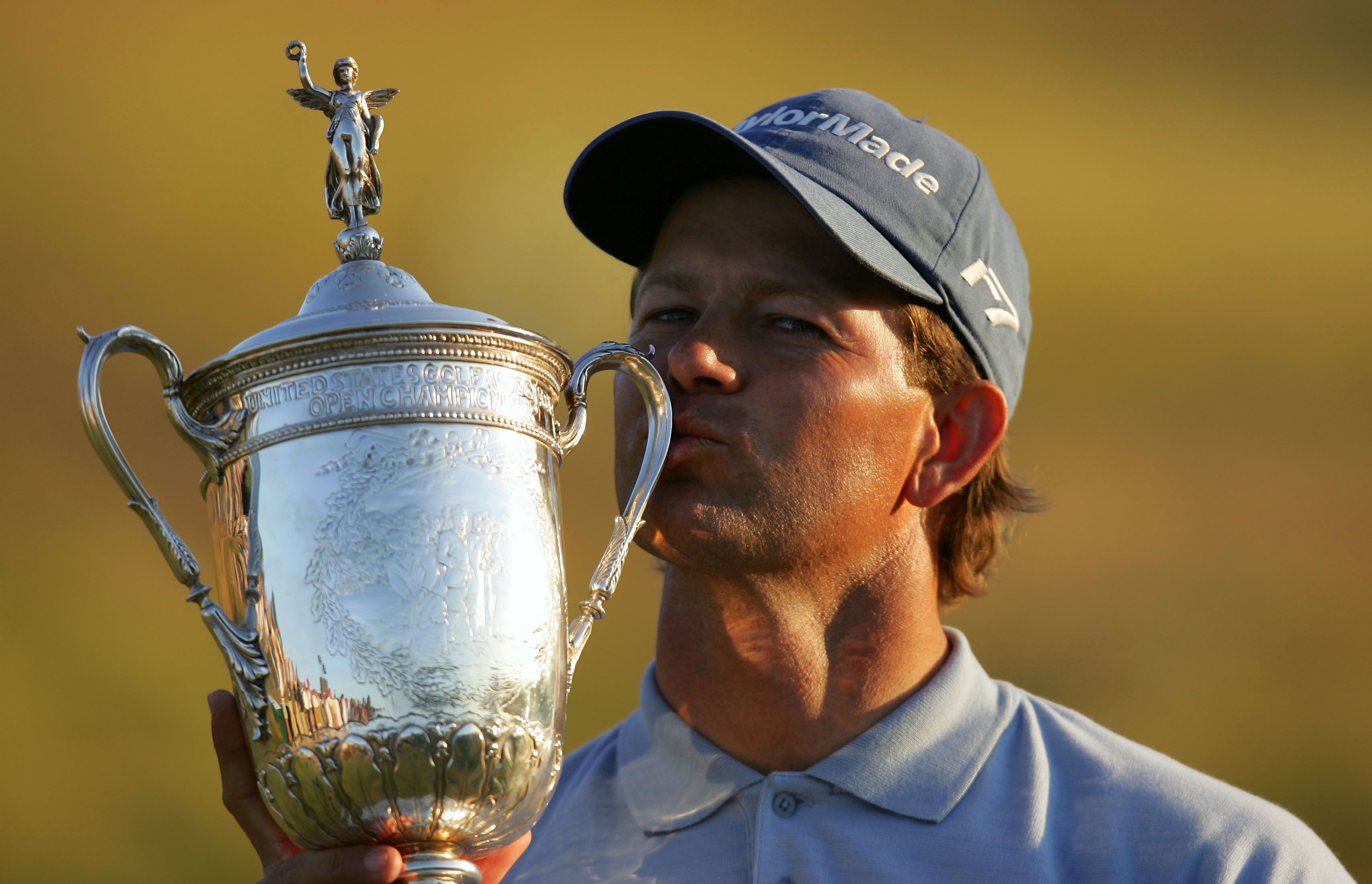
The USGA was forced to do plenty of soul-searching in the wake of the 2004 U.S. Open. Meeks had actually started the damage control before the final round concluded. As J.J. Henry told Ryan Lavner of golfchannel.com, “I can remember Tom Meeks coming up to us in the scoring trailer and saying how sorry he was, saying, ‘Unfortunately we lost the golf course.’ Basically, really sorry you guys had to play through some of those conditions.” But Meeks would never live down the mistakes and was replaced the following year by Mike Davis, who admitted the USGA made a bogey with the setup— “maybe a double bogey.” They got a mulligan in 2018. Ahead of that Open, Davis said, “[What happened in ’04] will not happen again. If it does, I’m retiring.”
2018
But it did happen again, during the third round, when it was hotter and windier than expected. (Note to the USGA: Shinnecock is next to the ocean, which sometimes produces wind, and it can warm in June in New York.) The 13th hole location was particularly dicey: atop a crowned section of the green, tucked behind a bunker. By the time he arrived at 13, Mickelson had bogeyed five of his previous eight holes and his mood had soured considerably, even as the fans occasionally serenaded him with “Happy Birthday,” as this was the day he turned 48. Mickelson’s approach shot raced over the green, and the ensuing pitch carried a little too far and his ball rolled (and rolled and rolled and …) all the way off the front of the green. Mickelson shook his head in disgust, but it was not yet clear if he was vexed by his imprecise play or the exacting hole location. He chipped past the flag again and then hit his eighteen-foot bogey putt too hard. As the ball trickled past the hole, Mickelson lumbered after it. Instead of letting his ball roll off the green yet again, he smacked it with his putter while it was still in motion. The crowd went silent with confusion. His playing partner, Andrew “Beef” Johnston, stared at Mickelson with a blank look. “I said, ‘That’s one of the strangest things I’ve ever seen,’ and then just started laughing,” said Beef. “I think it’s just a moment of madness.” Of course, the whole point of the U.S. Open is to push players to the breaking point—physically, mentally, spiritually. Mickelson missed his ensuing putt for triple bogey and then tapped in for an eight. Moments later, a rules official dinged him with a two-stroke penalty for violating Rule 14-5 by playing a moving ball, bumping his score on the hole to a perfect 10.

He probably could have gotten away with it if, as Beef suggested, he pled temporary insanity. “We’ve all been there,” says Paul McGinley. “The red mist comes down and you lose the head. It’s a difficult game and sometimes we snap. You apologize for it and people can accept that. But Phil had to double down and be a smart-ass about it. He tried to talk his way out of it, and that was more disappointing than what he did on the green. He brought the game, and himself, into disrepute.” Said Mickelson, “Look, I don’t mean disrespect by anybody. I know it’s a two shot penalty. At that time I just didn’t feel like going back and forth and hitting the same shot over. I took the two-shot penalty and moved on. It’s my understanding of the rules. I’ve had multiple times where I’ve wanted to do that, I just finally did it.”
Pressed on whether he had disrespected the national championship, Mickelson didn’t exactly strike a conciliatory tone. “If somebody is offended by that, I apologize to them, but toughen up,” he said, “because this is not meant that way.”
All of this will be in the air for this year’s U.S. Open. No one denies Shinnecock’s greatness. MacKay says, “I think that if it came down to a vote and the U.S. Open was only going to be played at one golf course anywhere in this country for the remainder of time, Shinnecock Hills would get my vote. I just think it’s that good.” No, the question is, Which Shinnecock Hills will we get? It’s no secret that previous administrations wanted the winning score to be around even par. The USGA has a new sheriff now when it comes to golf course setup, a mild-mannered gent named John Bodenhamer. He has adopted a motto for this U.S. Open: We’re going to let Shinnecock be Shinnecock. Kevin Kisner played in the 2018 U.S. Open and will commentate on this one. He recently had a long chat with Bodenhamer and reports, “He didn’t mention a [winning] score one time. What he wants to do, and I think the USGA’s kind of changed their tune to, is: we want to go to the best golf courses in the world and the ultimate test of the best players in the world is if they get every club in the bag dirty. And I think that’s a great strategy, as long as we don’t get the golf course to a point that it can’t be playable. So Shinnecock is a great test all the way around and has all the different variables that you want to have to test the players. And I think they’re going to let Shinnecock Hills be Shinnecock Hills and not let agronomy get in the way and not let a target score get in the way.”

Adds Furyk, “I’m not sure the USGA has ever been accused of, what was it, wimping out? Is that what you said?”
And yet the fairways will be considerably wider this time around than they were for any previous U.S. Open at Shinnecock. That’s not a good portent for those who like to see the players suffer in the National Open. Shinnecock Hills has already died once. The essential nature of the U.S. Open may have to be sacrificed so it can live again.

JOIN OUR NEWSLETTER
Get our top stories in your inbox, including the latest drops in style, the need-to-know news in pro golf, and the latest episodes of Skratch’s original series.