4 MIN READ
March 27, 2026
What Happens When a Golf Ball Is Submerged in Water? A Field Test
You've seen it plenty on the pro tours. But how can you pull it off if it happens to you? Here's what we learned.

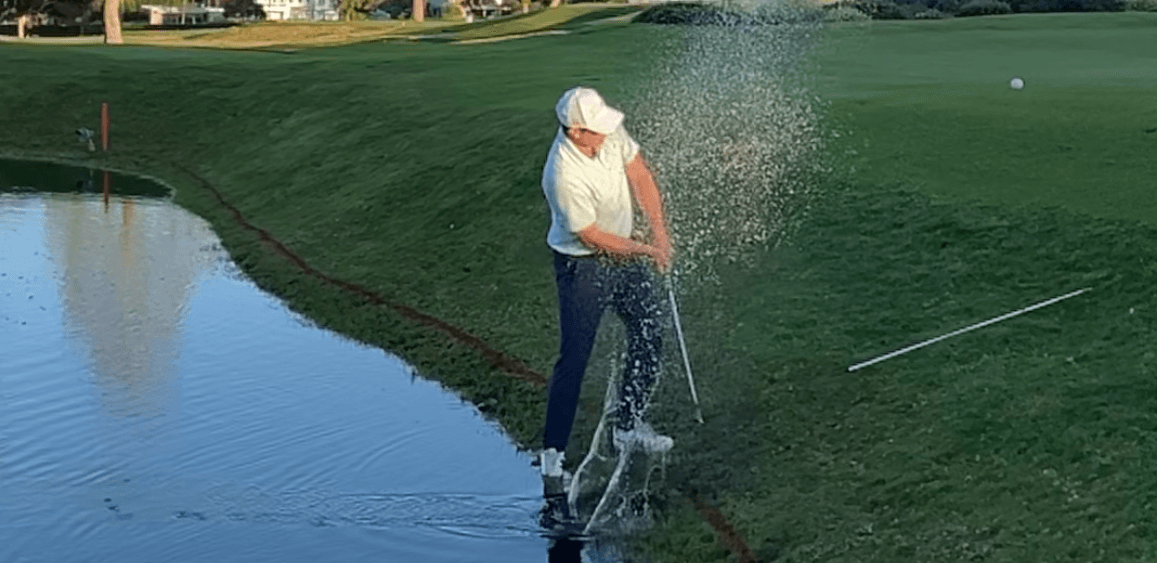
Golfers rarely practice water shots, but every now and then the game asks the question. A ball sitting in shallow water often looks playable, yet it’s not entirely clear what actually happens at impact once the club meets both ball and water. Does the ball launch normally? Does distance collapse? And how much does the shot change as the ball becomes more submerged?
To explore this, I set up a simple field test examining how increasing levels of ball submersion influence launch and carry.
The Test Setup
The experiment was conducted beside a shallow water hazard with a steep bank rising from the water. The bank measured 68 inches from the water surface to the brow.
To create a visible clearance reference, an alignment stick was positioned at the top of the bank in line with the flag (15 yards away). Three pieces of green tape marked a 12-inch clearance window above the brow, creating an 80-inch vertical reference height for any shot attempting to clear the bank.
The objective was simple: produce enough launch and carry to clear the bank and pass through or over the 12-inch clearance window.
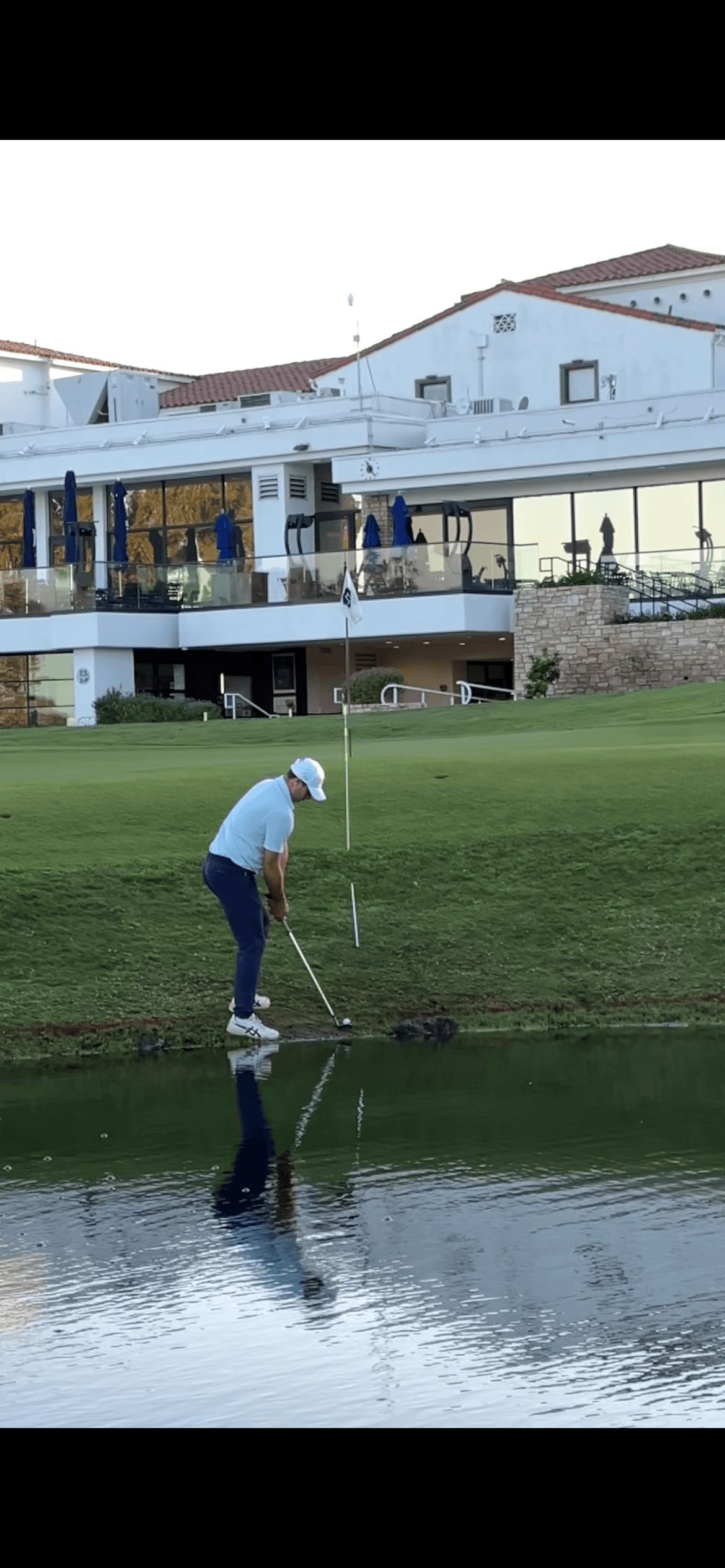
Down-the-line view of the test setup showing the water line, the 68-inch bank height, and the alignment stick marking the 12-inch clearance window above the brow, creating the 80-inch vertical reference height.
The Lies
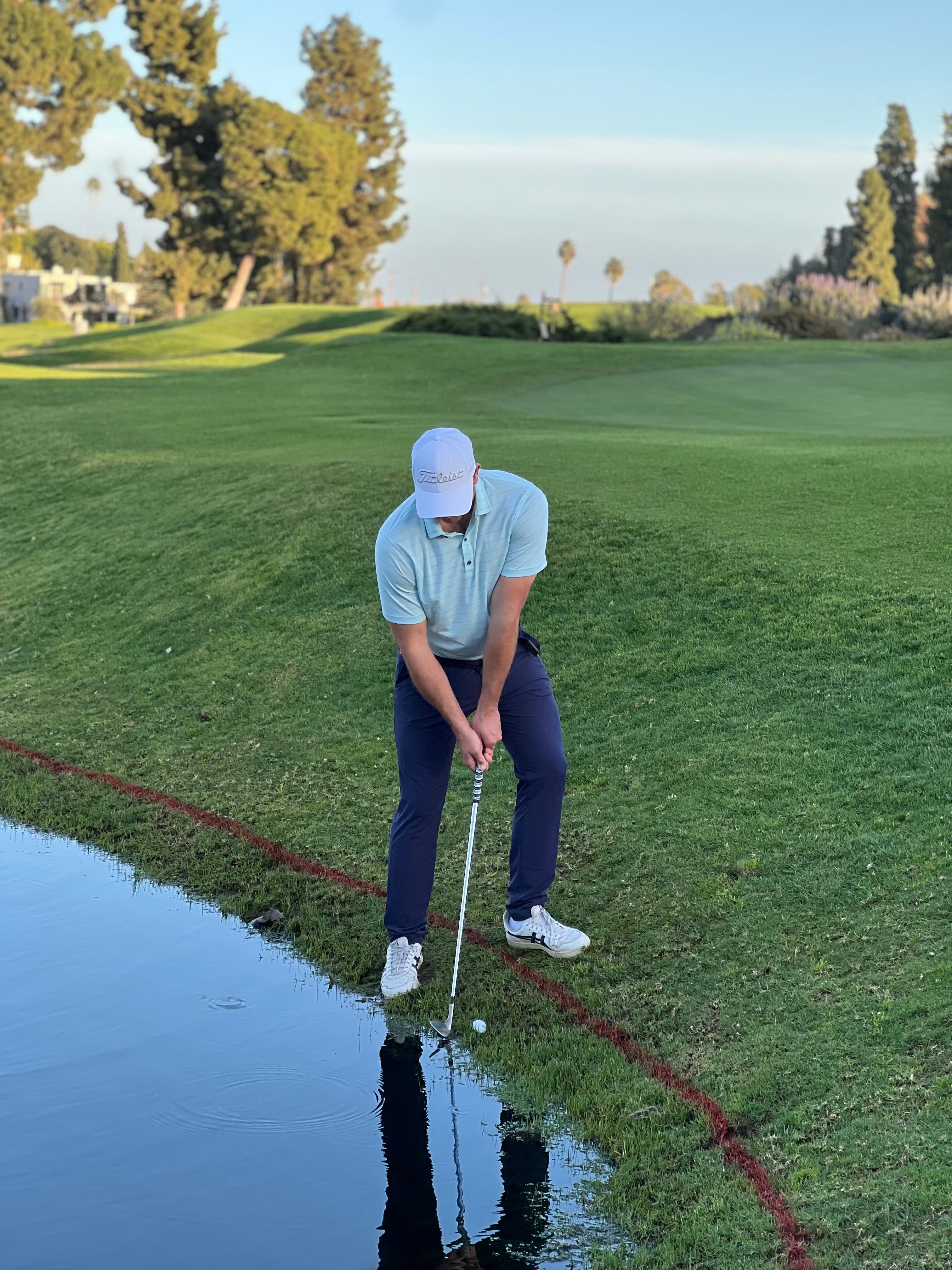
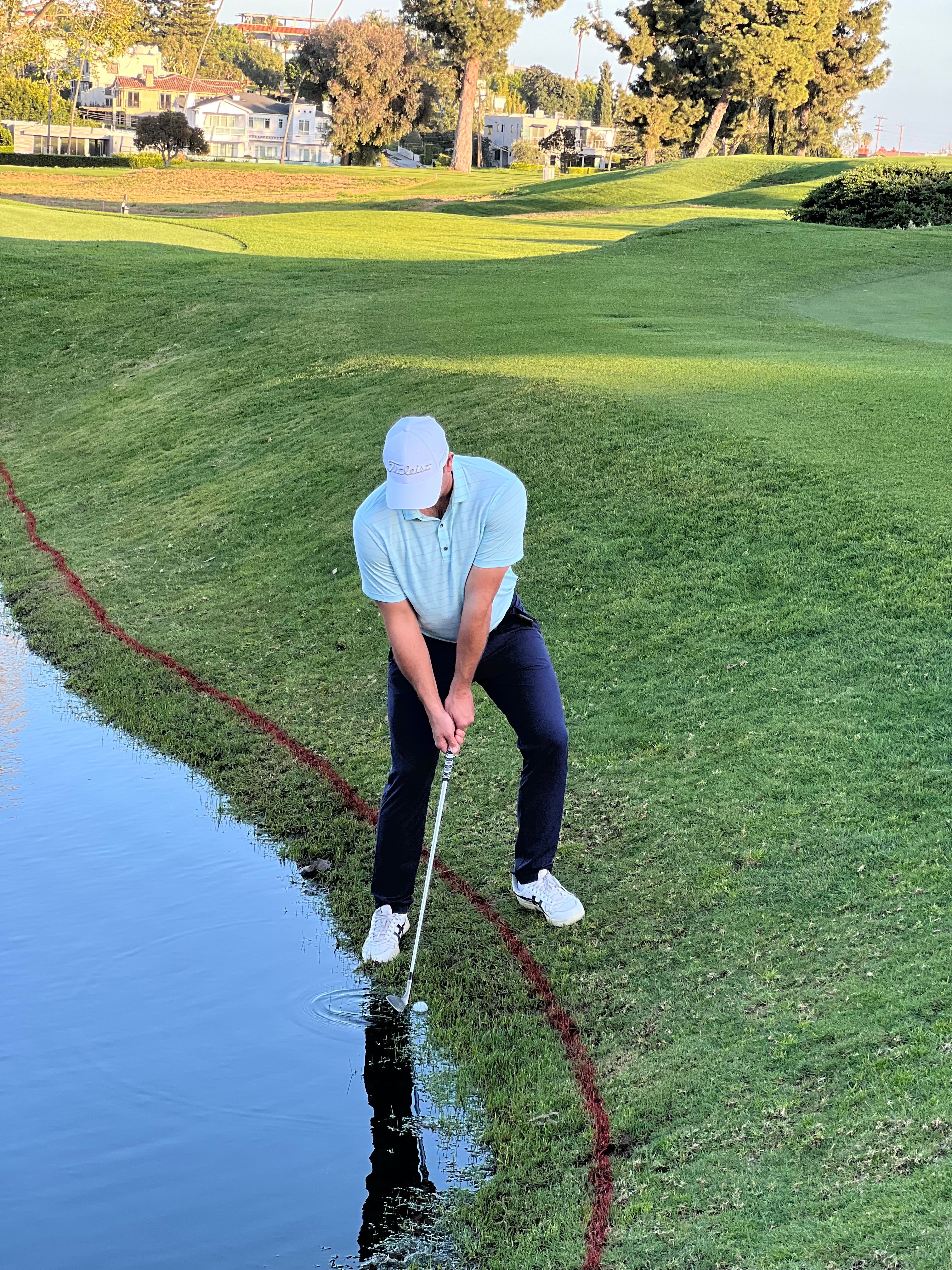
Five levels of submersion were tested:
Ball positioned on the bank but touching the water
Approximately one-quarter submerged
Approximately one-half submerged
Approximately three-quarters submerged
Fully submerged
Each lie was photographed prior to the strike to clearly document the level of submersion.
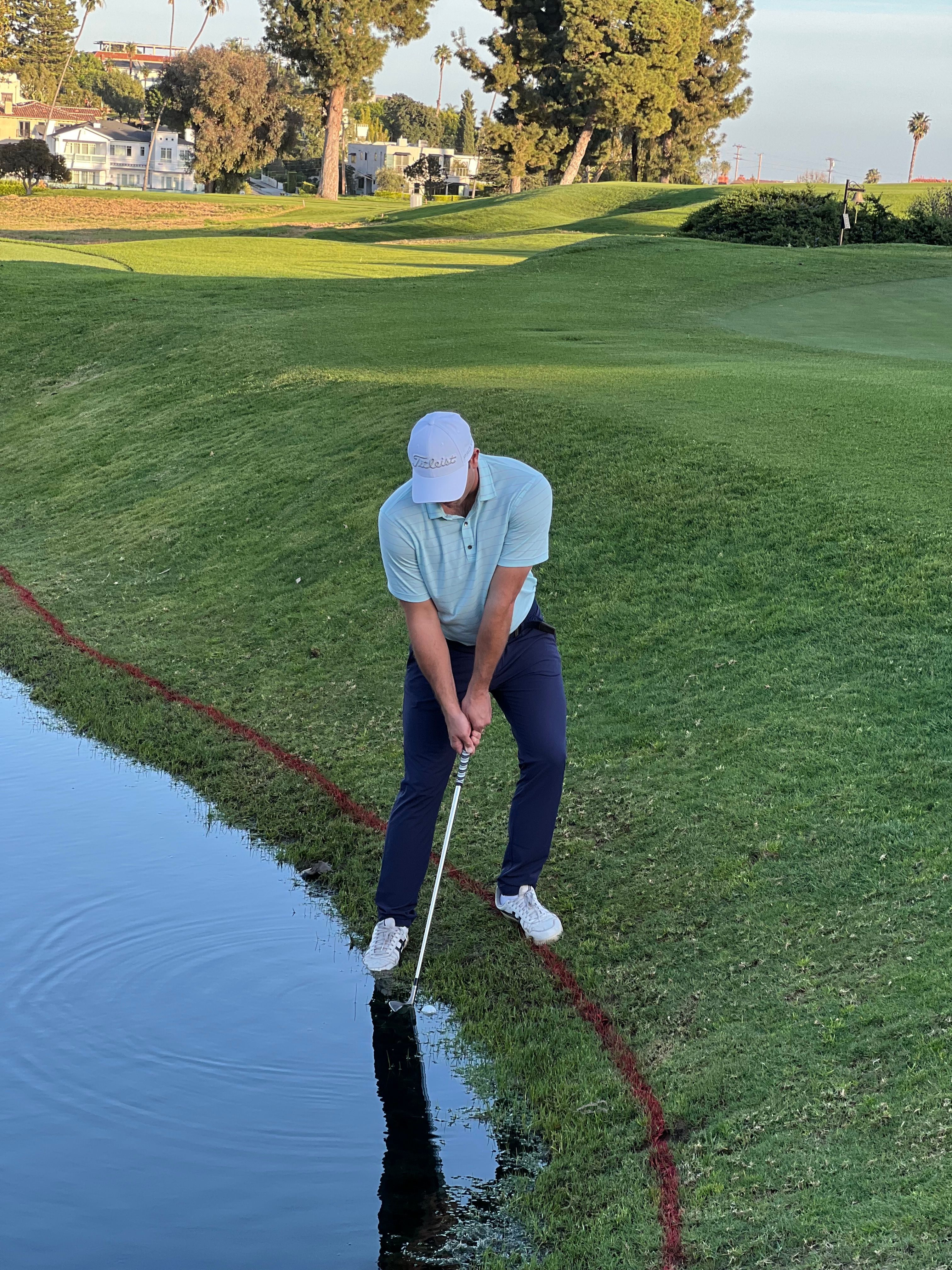
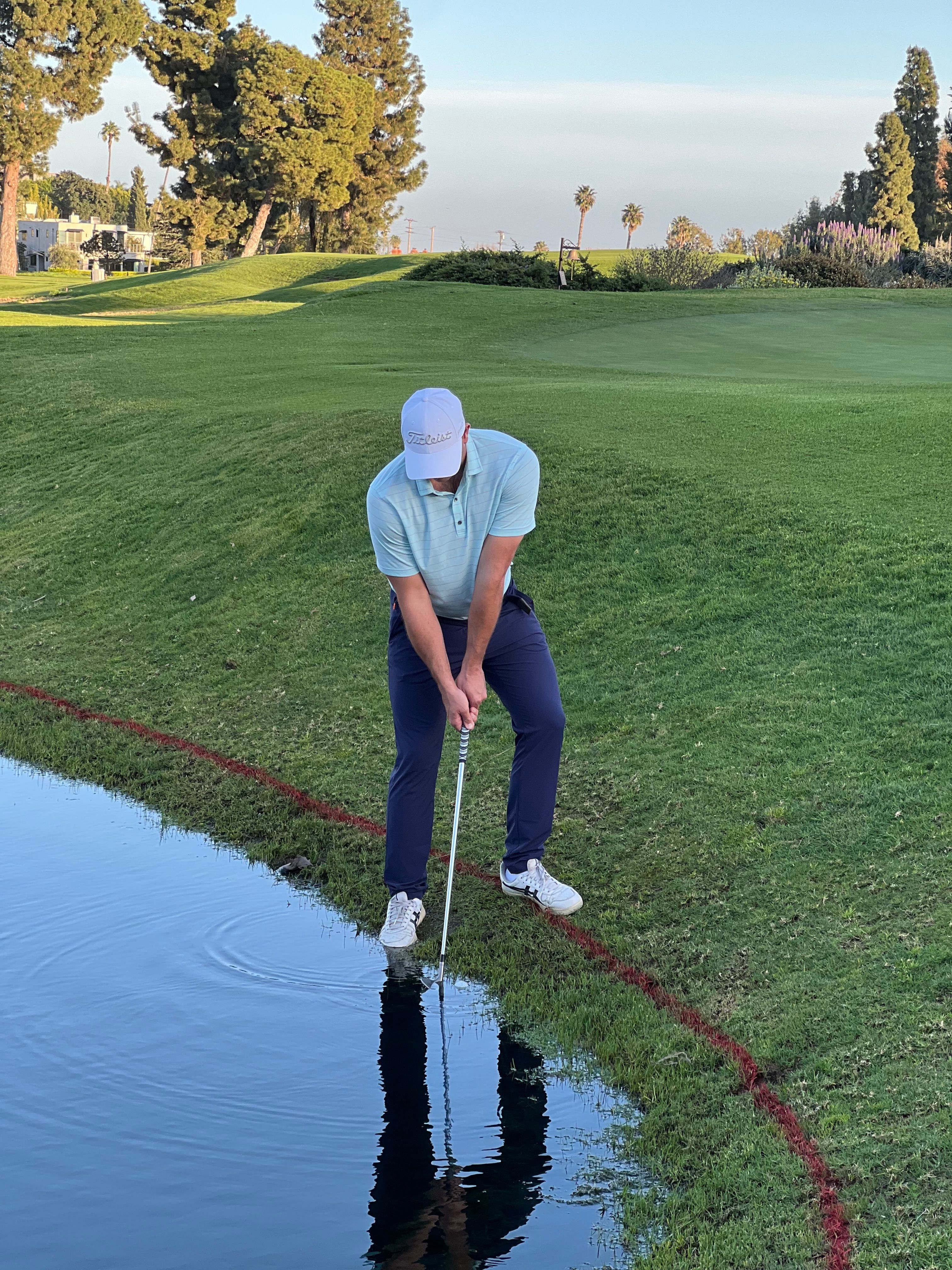
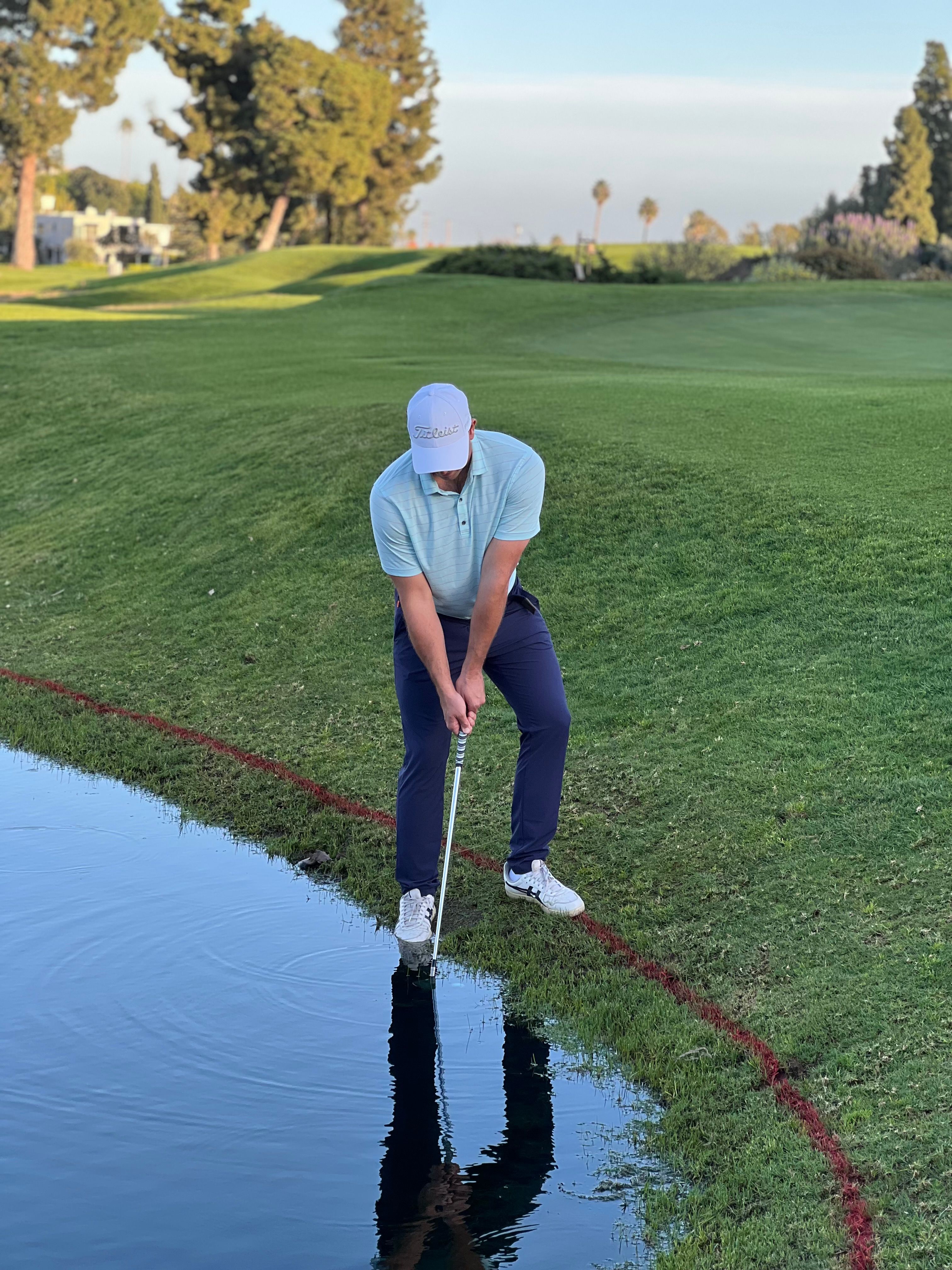
As the Ball Went Deeper
With the ball sitting on the bank but touching the water, the strike behaved similarly to a heavy lie on wet sand. The ball launched predictably and cleared the bank comfortably.
As the ball became ¼ and ½ submerged, resistance at impact became more noticeable. The club was now feeling more resistance with both water and ball, which began to absorb energy. This called for a very committed swing; and a hard stop at the ball to chop through the greater resistance.
Through these levels a 52-degree wedge performed reliably, still producing enough height and carry to clear the bank until..
Where It Got Interesting
The biggest shift occurred once the ball became fully submerged.
At that depth the 52-degree wedge struggled to generate enough launch and ball speed to consistently reach the 80-inch clearance reference above the water.
Switching to a 45-degree pitching wedge restored the ability to clear the bank, producing a stronger and more reliable flight.
To explore the effect of loft further, a 60-degree wedge was also tested. This produced the largest splash and the lowest ball speed, highlighting how dramatically water resistance can reduce strike efficiency when higher loft is used in fully submerged conditions.
How Much Energy Was Lost?
One interesting reference point came from comparing the shot to a normal wedge swing.
During the test I used a swing I would normally make for a 60-yard shot with a 52-degree wedge. Under normal conditions that motion would produce roughly 60 yards of carry.
From the fully submerged lie, however, the ball travelled only around 15 yards.
In effect, the shot produced roughly 25% of the expected carry distance, illustrating how dramatically water surrounding the ball can reduce strike efficiency and ball speed.
Technique Required
One technical adjustment became clear during testing. Successfully escaping the water required maintaining speed into the ball and stopping the club quickly through impact, a motion sometimes described as “putting the brakes on.”
This creates maximum speed at the strike before the club rapidly decelerates after impact.
The motion is similar to the technique often used when hitting through thick weeds or heavy rough, where maintaining speed at the ball is critical to prevent the club from losing energy before contact.
What Golfers Should Know
Water lies are rare, but they reveal how quickly strike dynamics change when resistance is introduced before impact.
As the ball becomes more submerged:
Water absorbs energy before the strike
Ball speed and carry distance drop dramatically
Higher loft can increase splash and reduce efficiency
A committed strike becomes essential
Even a lie that appears playable can quickly become difficult once the ball becomes fully surrounded by water.
Final Thoughts
Water lies offer a fascinating example of how environmental conditions influence the golf strike. What begins as a manageable recovery shot can quickly become a serious challenge as the ball becomes submerged.
The deeper the ball sits in the water, the more important both club selection (Club Up) and commitment to the strike become.
Cameron Robinson is the Head PGA Professional at Brentwood Country Club in Los Angeles. He regularly runs testing and case studies to better understand impact and ball flight.

JOIN OUR NEWSLETTER
Get our top stories in your inbox, including the latest drops in style, the need-to-know news in pro golf, and the latest episodes of Skratch’s original series.



Skratch 2026 © All rights reserved