
5 MIN READ
July 29, 2025
Dispatches from Hagen 54: The Original Marathon Golf Day, Revisited
The newest golf marathon requires no gimmick. In fact, it was the first of its kind.

Golf marathon events have become a staple in the amateur golfer’s summer rota: 72-hole solstice marches around Bandon Dunes; 100-hole hikes for charity; even 24-hour circuits, where darkness requires luminescent balls and head torches.
These large-format golf adventures exist at the nexus of pleasure and pain, offering participants equal parts blistered toes, dizzying exhaustion, and runner’s high—and many cracks at a hole-in-one. It’s like the gourmand’s ritual of devouring an ortolan—the tiny, endangered songbird, drowned in Armagnac and eaten whole beneath a napkin in a blend of reverence and shame. Bones pierce the gums, near-scalding juices flood the throat, but the flavor is said to be inimitable.
As new events pop up each year, organizers play a game of one-uppance, distinguishing their event from the rest by offering more extreme hole counts, more luxurious accommodations, more food and booze than you could possibly stomach. It can get a bit much.
But the newest golf marathon requires no gimmick, and, in fact, was a first of its kind.
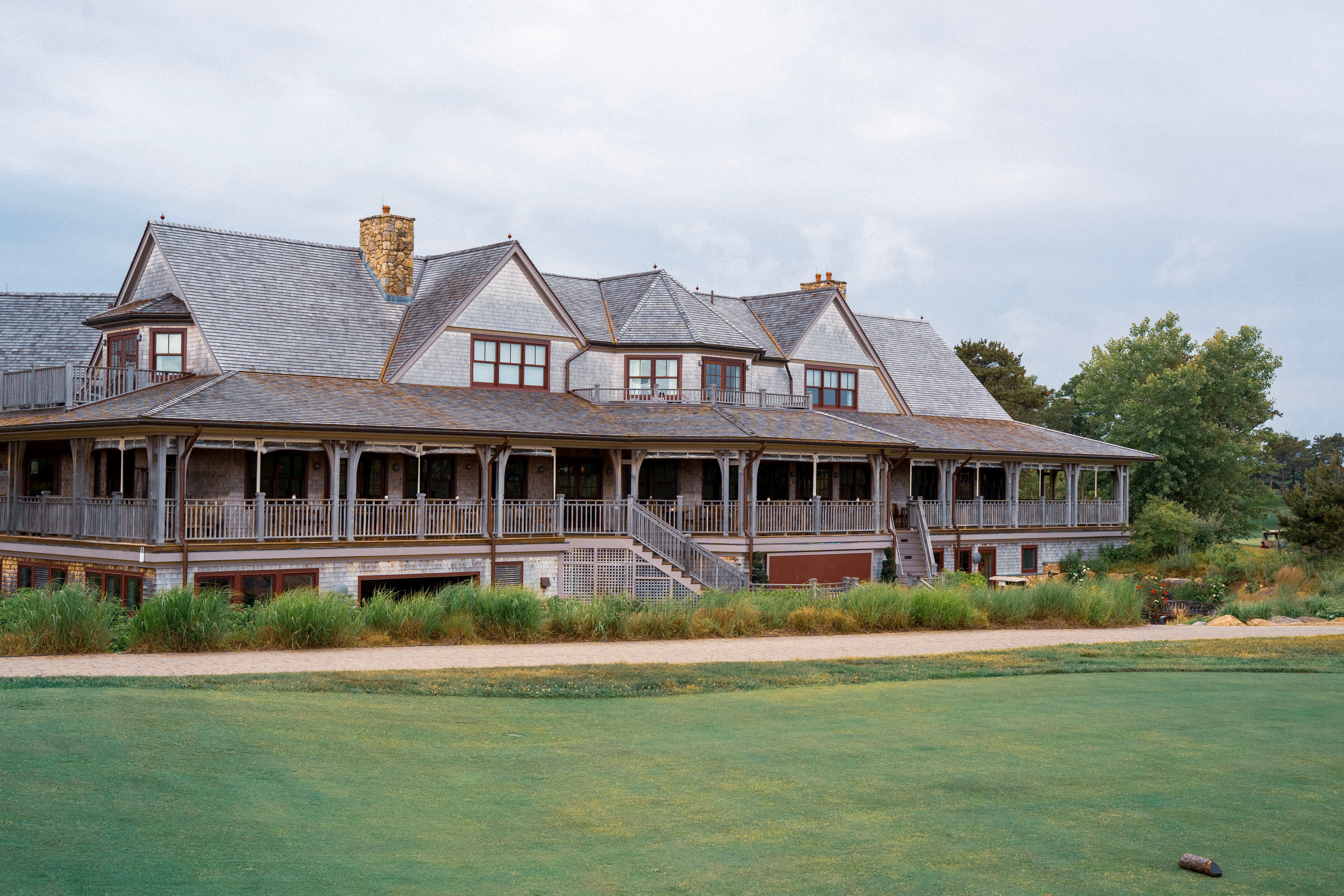
In 1920, legendary professional golfer, Walter Hagen, journeyed to Deal, nestled along England’s southeast coast, to compete in his inaugural Open Championship. The tournament was played at Royal Cinque Ports—the first Open Championship in five years, since the start of the Great War. Scottish champion, George Duncan, took home 75 British pounds and a gold medal, generously valued at 25 pounds.
After the championship, Hagen and fellow pro, Jim Barnes, stuck around for an epic day of golf. A map would be helpful here: the pair played eleven holes on Cinque Ports, before jumping a boundary fence to the iconic Royal St George’s to play ten holes, before jumping another fence to another neighboring Open Championship host, Princes Golf Club, where they played 18. After Princes, they finished off the remaining holes at Royal St George’s and Cinque Ports, bringing their tally to 54 on the day.
When Hagen was asked later about the day, he shrugged: “Scores? I've forgotten. We weren't trying to break any records. We were just lucky to go that far. We did it for fun.”
In the 100 years that followed, the membership at Royal St George’s, Princes, and Cinque Ports followed in Hagen’s footsteps, covering the 54 holes with an annual Stableford match. In 2025, the Hagen 54 was opened as a public-facing event, and I was very graciously offered a spot.
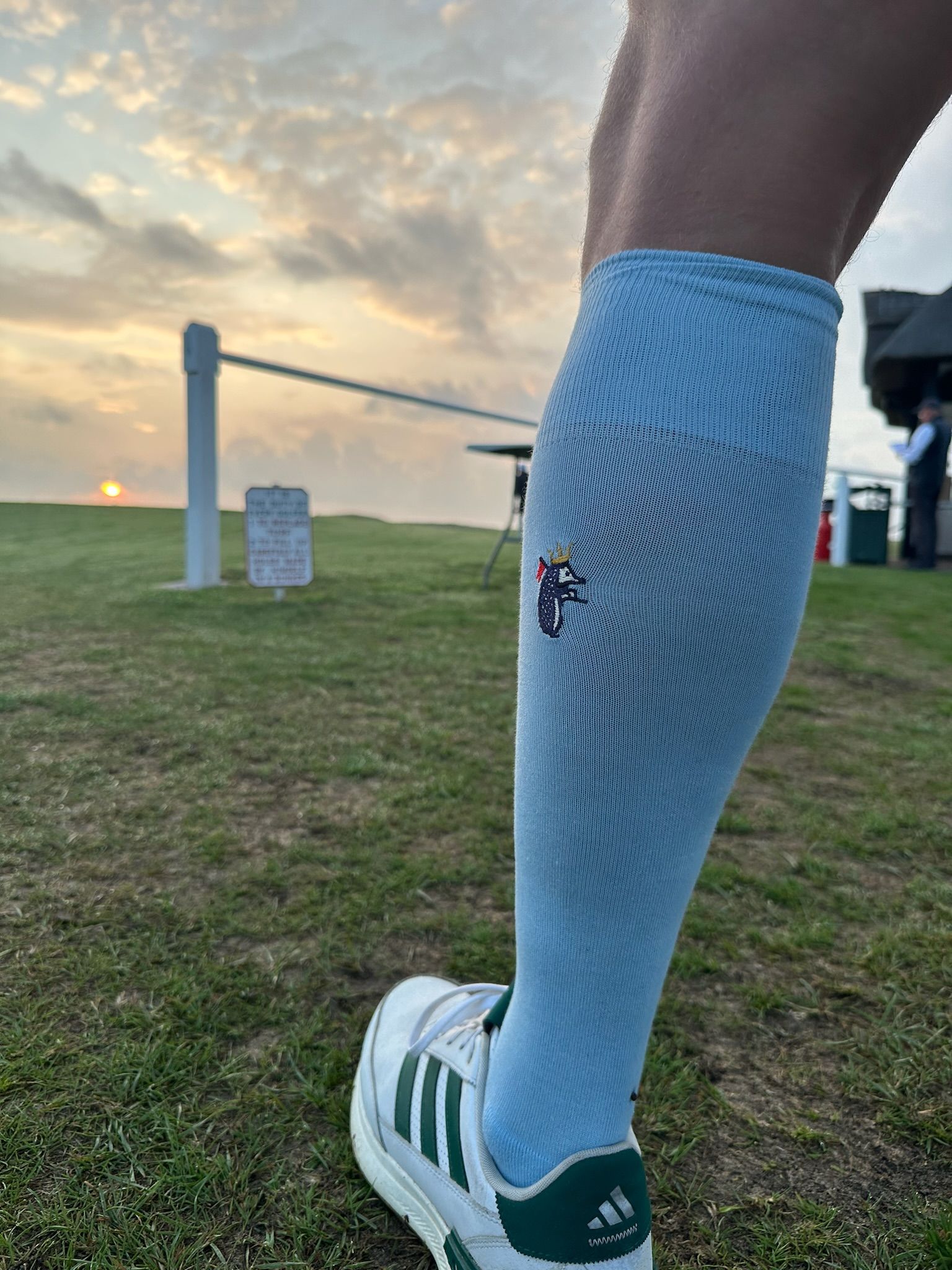
On the eve of play, we arrived at Cinque Ports for a welcome barbecue, replete with sausages and Guinness—embossed with an image of the tournament’s very charming hedgehog mascot—along with some remarks about the event’s history. We were given bags with a commemorative headcover, a golf shirt, and traditional English long socks (required to play at RSG/RCP). The official yardage book and scorecard were beautifully produced; rather than distinguishing the identities of the three courses, the book and scorecard treated the entire loop as one, 54-hole circuitous routing that bobs and weaves through each course—just as Hagen did.
We were giddy. Giddiness, it turns out, makes you beat your 4:15 a.m. alarm by two hours.
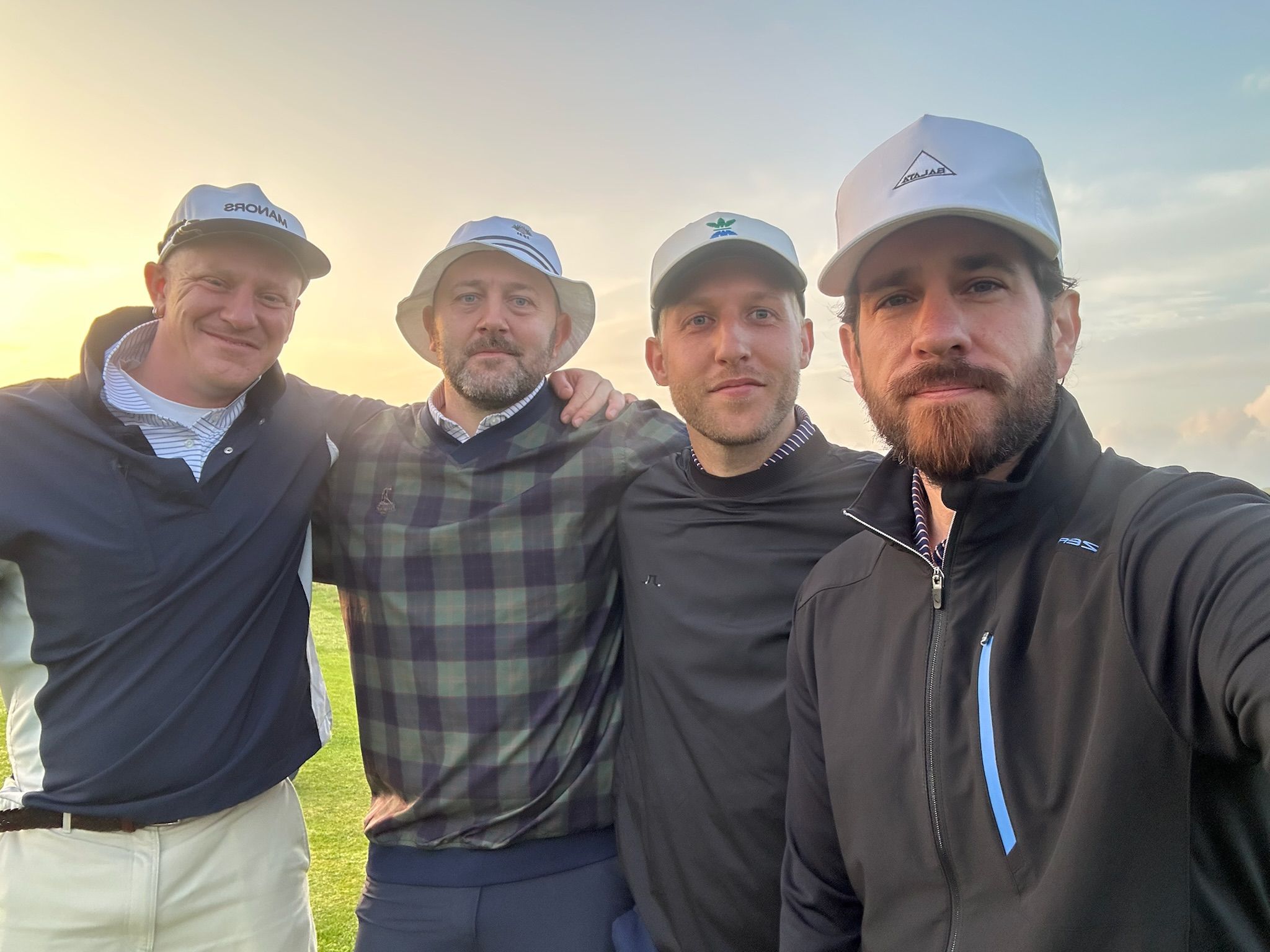
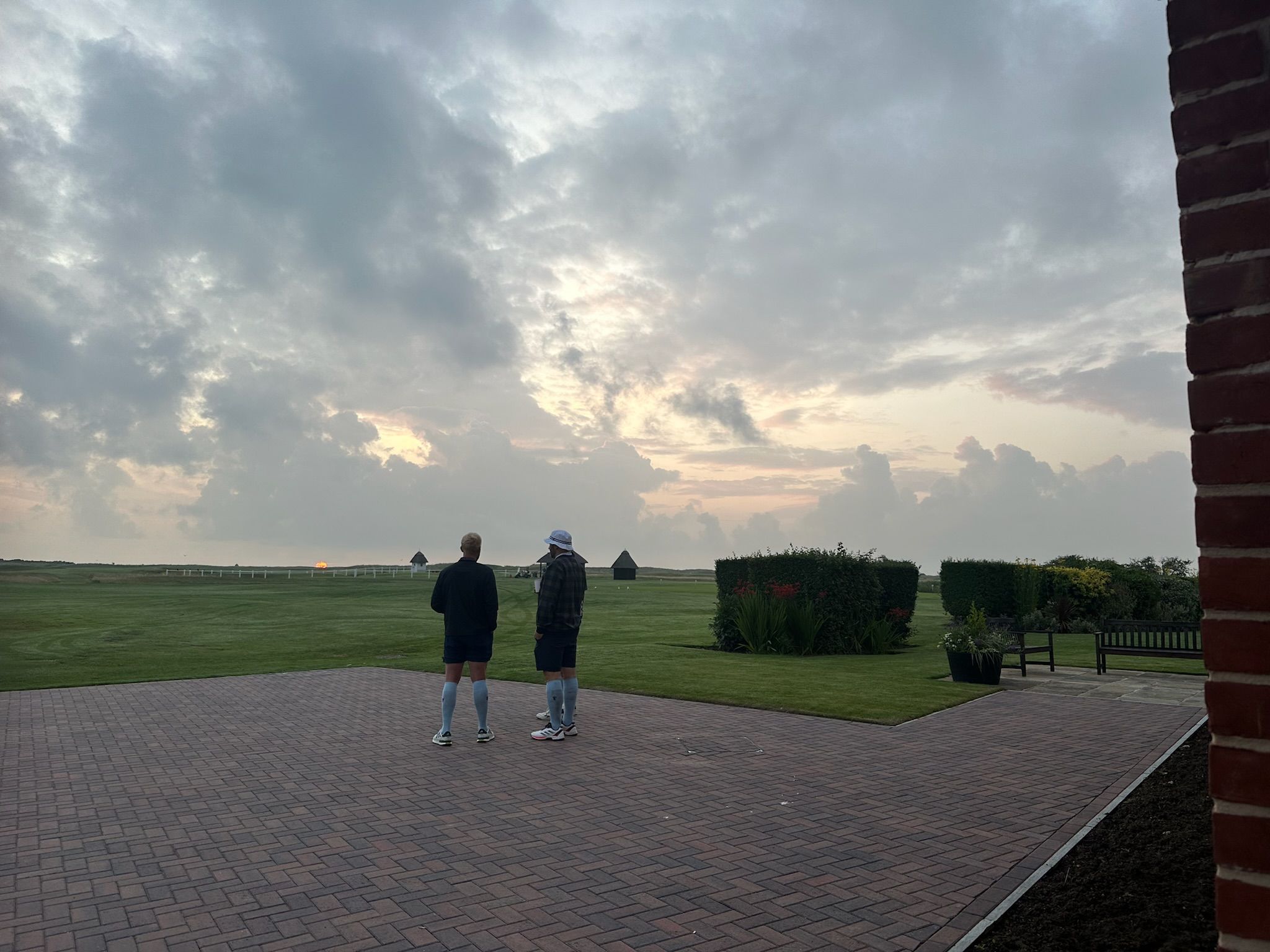
We cruised to our starting position (the course’s 44th hole, or, the second at Royal St George’s) early, and took in the cantaloupe sun cresting over the Strait of Dover to the east. The horn signaled, fare-thee-wells were exchanged, and balls were in the air. For the next several hours, as we ducked through Royal St George’s, bounded over to Cinque Ports, cracked open several of the event’s branded beers and necked down life-giving bacon butties, everything was suspended in this phantasmic haze: the buzz of jet lag and three hours of sleep. Each hole felt entirely independent from everything and everyone else in the world—a testament to the course architecture. Then, the rain started.
I lived in Portland, Oregon for ten years. I’ve played golf in the howling wind and driving rain. But to do some quick math and realize that you have another 30 holes and six-or-so hours to go in the relentless, piercing downpour, sobers you up pretty quickly.
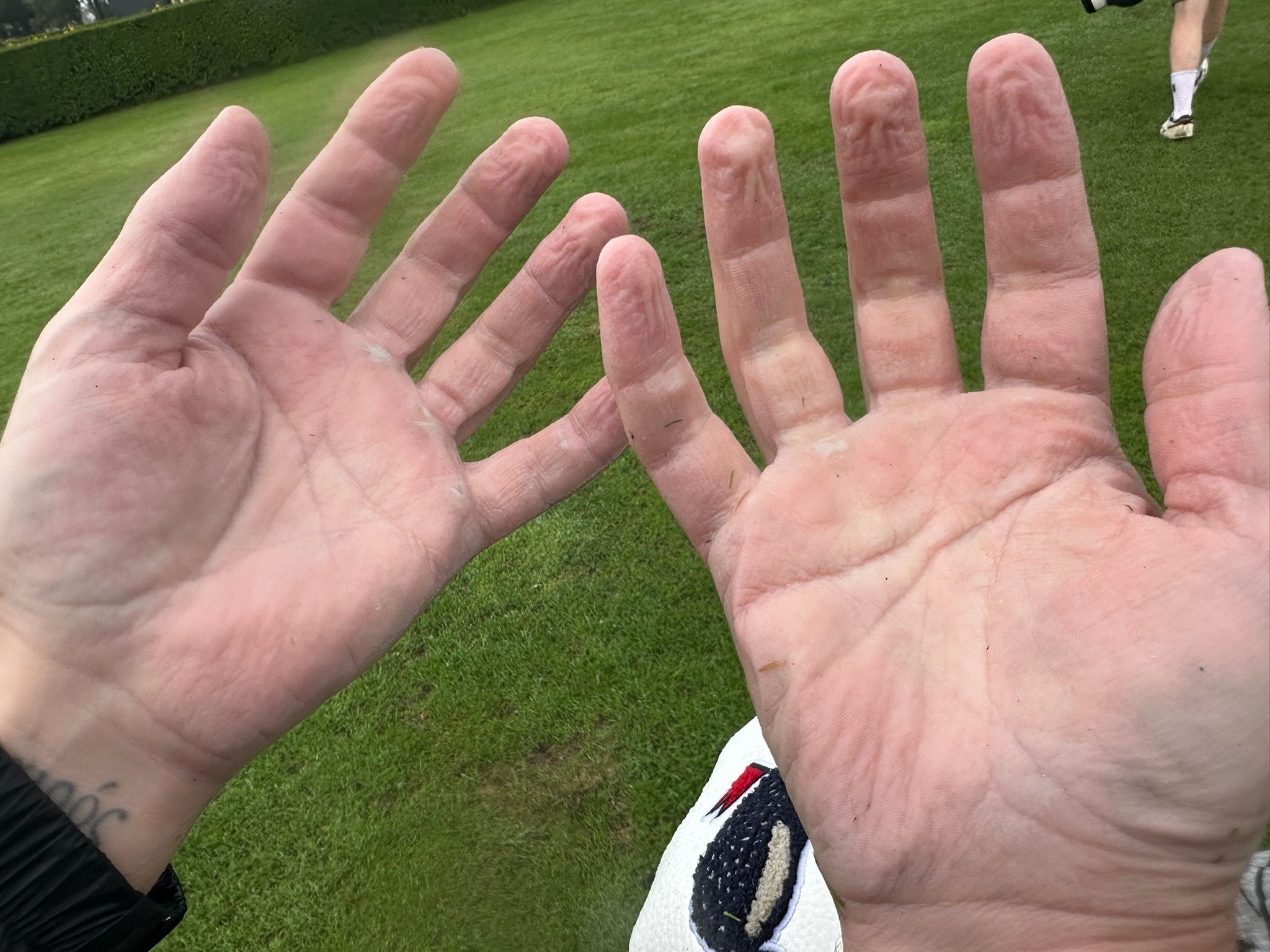
The first 30 minutes you’re trying to stay dry, keep grips alive, keep gloves alive. The next 30 minutes, you realize that’s not possible, and it gets a bit miserable. The final five hours, you give over and begin truly playing—like a kid, unbothered by discomfort, un-fussed by result, ready to try anything.
On hole 28 I putted from 80 yards out. On hole 35 I played with just a 4-iron. On hole 47 I hit a backwards shot. And on hole 54 I kissed the ground for making it to the end. Going by the books for 13 hours of golf is plainly boring.
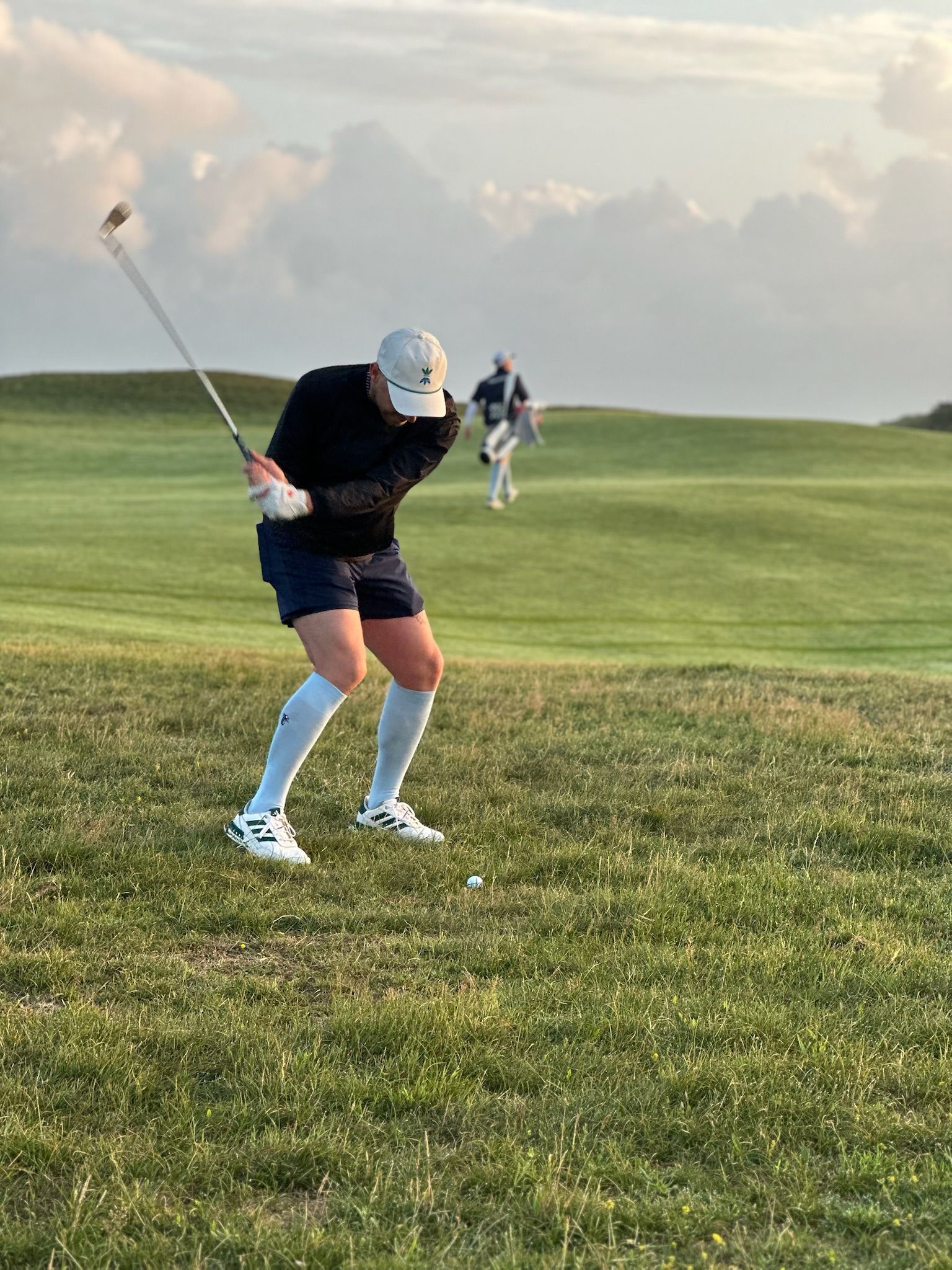
That’s what I believe these golf marathon events are good for: grinding down the callouses on how you normally play—on how the tradition, the culture of golf, has calcified your swing, your clothing, your mind.
The Hagen 54 offers a reverent window to the past, in tandem with a bold step forward. Besides the revival of Hagen’s 105-year-old golf adventure, there are reminders of the past sprinkled all around. On Princes, a memorial marks the spot where an RAF pilot—and club member—crashed his spitfire during World War II. And 40 miles across the Channel lie Calais and Dunkirk, where Churchill deputized civilian-captained Little Boats from Deal, Sandwich, and the rest of England’s southeastern coastal towns to ferry British soldiers back to safety.
As we trudged off the green of our 54th hole, weary and waterlogged, I thought again of Hagen and Jim Barnes; how, even as professionals, they chose play over score, how—had they gotten the same weather as us—they’d have been even heavier in their cotton and tweed suits, and ultimately, how golf is a killer time machine.

JOIN OUR NEWSLETTER
Get our top stories in your inbox, including the latest drops in style, the need-to-know news in pro golf, and the latest episodes of Skratch’s original series.




Skratch 2026 © All rights reserved