Style
12 MIN READ
December 30, 2025
The 2025 Skratch Style Awards
The style moments, products, and ideas that actually mattered in golf in 2025
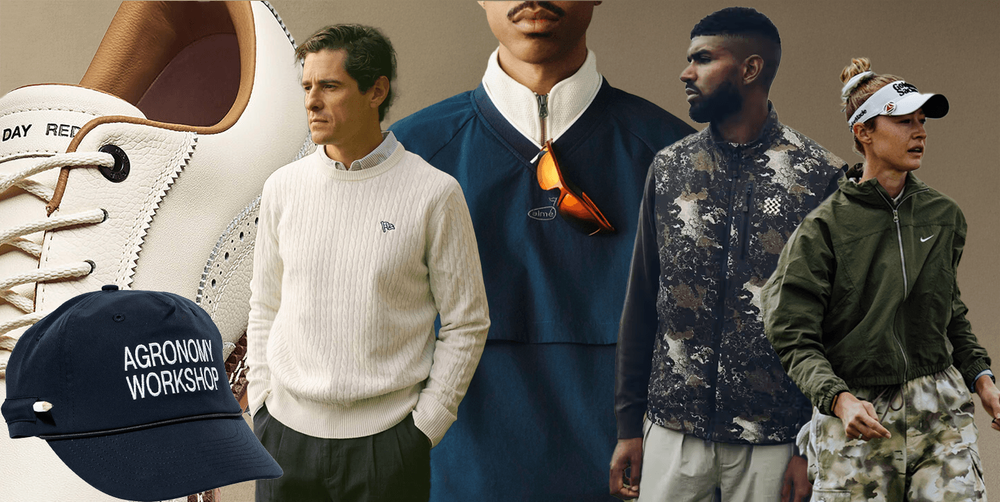
The year 2025 was one of those rare years where golf felt fully alive in every direction at once. On tour, in product, in storytelling, and in culture. The game showed up on television in new ways, online with more depth, and on the course with more personality than it has had in a long time. Style felt intentional again. Brands took real risks. Conversations moved faster and deeper. What follows is not a list of winners or a recap of everything that happened. It is a personal record of the moments, products, ideas, and experiences that defined how golf looked and felt to me this year. The things that lingered. The things that mattered.
Best Dressed Moment on Tour
Jason Day — Third Round, Genesis Invitational 2025
Nelly Korda — AIG Women's Open 2025
In a sport still dominated by navy, the absence of it made both of these moments land harder.
Jason Day continues to feel like he is standing alone on the podium when it comes to men's tour style. Through the lens of Malbon and PAYNTR Golf, he has quietly put together one of the strongest runs of looks this season. That all cream white pintuck trousers and cardigan moment at Torrey Pines came early in the year, but it never left my mind after that Saturday. It felt intentional, soft, confident, and completely unbothered by traditional golf color rules.
On the women's side, Nelly Korda feels like she is entering a new chapter. Her AIG Women's Open look signaled a willingness to explore beyond safe and familiar. With Nike, she has a real opportunity to pick up where Michelle Wie West left off by pushing performance silhouettes into something more expressive. If this is the direction, I see a very strong 2026 ahead.
Best Collaborations of the Year
For me, the value of a collaboration is simple. It is the chance to create an emotional experience through product that would not exist without the other party. When done right, it feels natural, not forced. Tasteful, not loud.
FootJoy x Aimé Leon Dore
FootJoy and Aimé Leon Dore came from two very different worlds. One rooted in performance and tradition. The other in modern menswear and cultural taste. Together, they delivered restraint, elegance, and credibility without either side losing its identity. It felt considered.
Manors x Reebok
Manors and Reebok made sense in a different way. Born from the same region, this partnership felt like a homecoming. Reebok is stepping back into golf, Manors is welcoming them in, and bringing them up to speed. It was equal parts nostalgia and reset.
RELATED: Reebok’s reentry into golf isn’t a gimmick—it’s a deliberate blend of legacy and innovation
Malbon x Futura Laboratories
Malbon and Futura Laboratories leaned on history. Old techniques and visual language delivered on a new canvas, staged across the most prestigious arena in all of sports, The Masters. Art meeting golf without apology.
Collection of the Year
Quiet Golf FW 25
Quiet Golf is, in my opinion, one of the strongest golf brands to emerge from the Covid era. Launched in 2021, the brand has taken a measured approach to growth, expanding its range season by season without rushing the process. That patience paid off in FW 25.
This was their most complete collection to date. Tops, bottoms, headwear, and golf gear all working together as a single system rather than isolated pieces. Every item felt wearable, modern, and considered, while still passing even the most tedious golf dress codes out there. That balance is harder to pull off than it looks.
What continues to separate Quiet Golf is the team behind the scenes. They understand design language, proportion, and cut-and-sew at a very high level. Nothing feels forced. Nothing feels trend-driven. The consistency is the point.
FW 25 was not just a good drop. It was a fully realized lineup. The strongest collection of the year, full stop.
Most Tasteful Drop
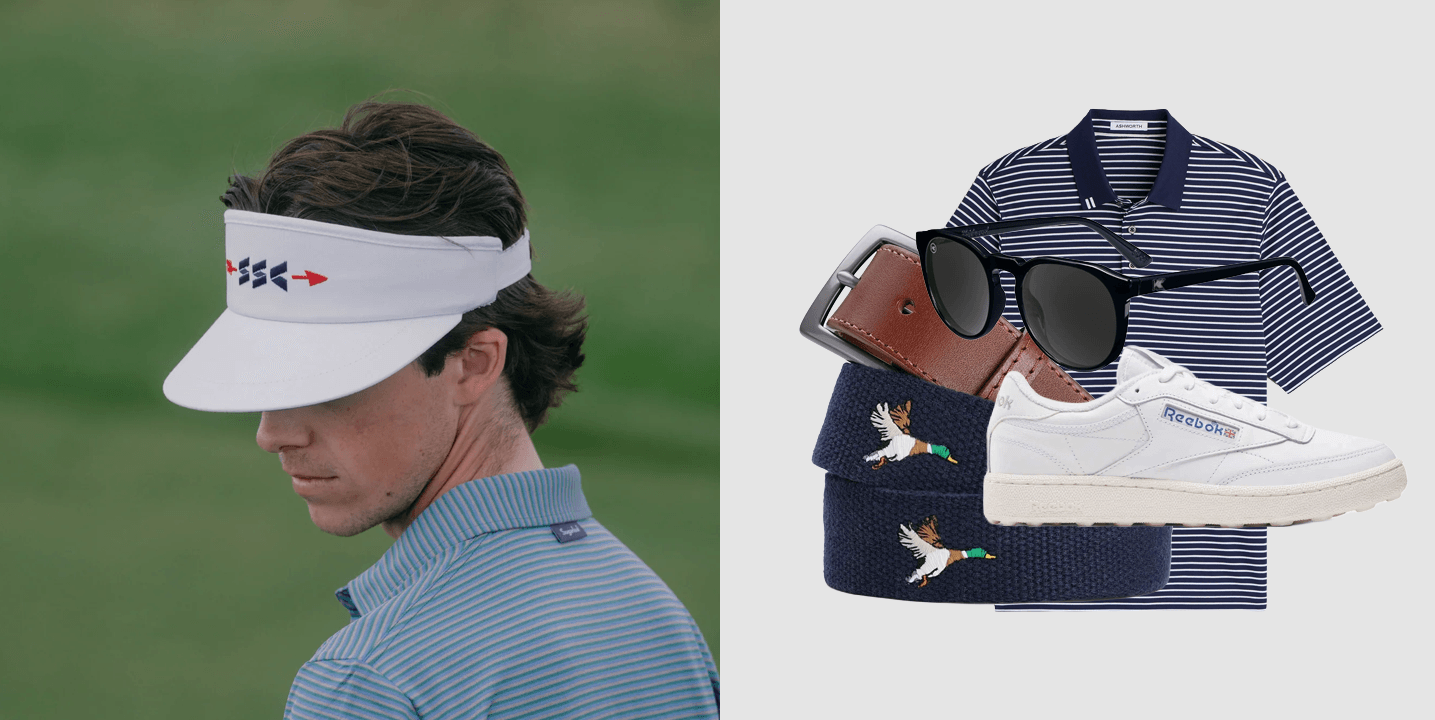
Sugarloaf Social Club — Double Seve High Crown Visor
Sugarloaf Social Club was already on my short list of the most tasteful brands in golf. The Double Seve visor confirmed it.
The reference point is one of those quiet, accidental style moments that golf history tends to forget. Seve Ballesteros in 1986. A visor. Two shirt tags are layered over the logo. A quick fix that became iconic without ever trying to be. Most brands would overlook that detail or turn it into something loud.

Sugarloaf Social Club did the opposite. They slowed it down. Studied it. Reintroduced it with restraint.
The Double Seve visor feels like a love letter to nuance. No over explanation. No forced nostalgia. Just a clean recreation that respects the moment and trusts the audience to understand it. High crown. Simple execution. Deep golf literacy.
This was not about selling hype. It was about honoring a detail that only true students of the game remember. That level of care is rare. And in a year full of drops, this one stood out for saying the least and meaning the most.
Sneakers of the Year
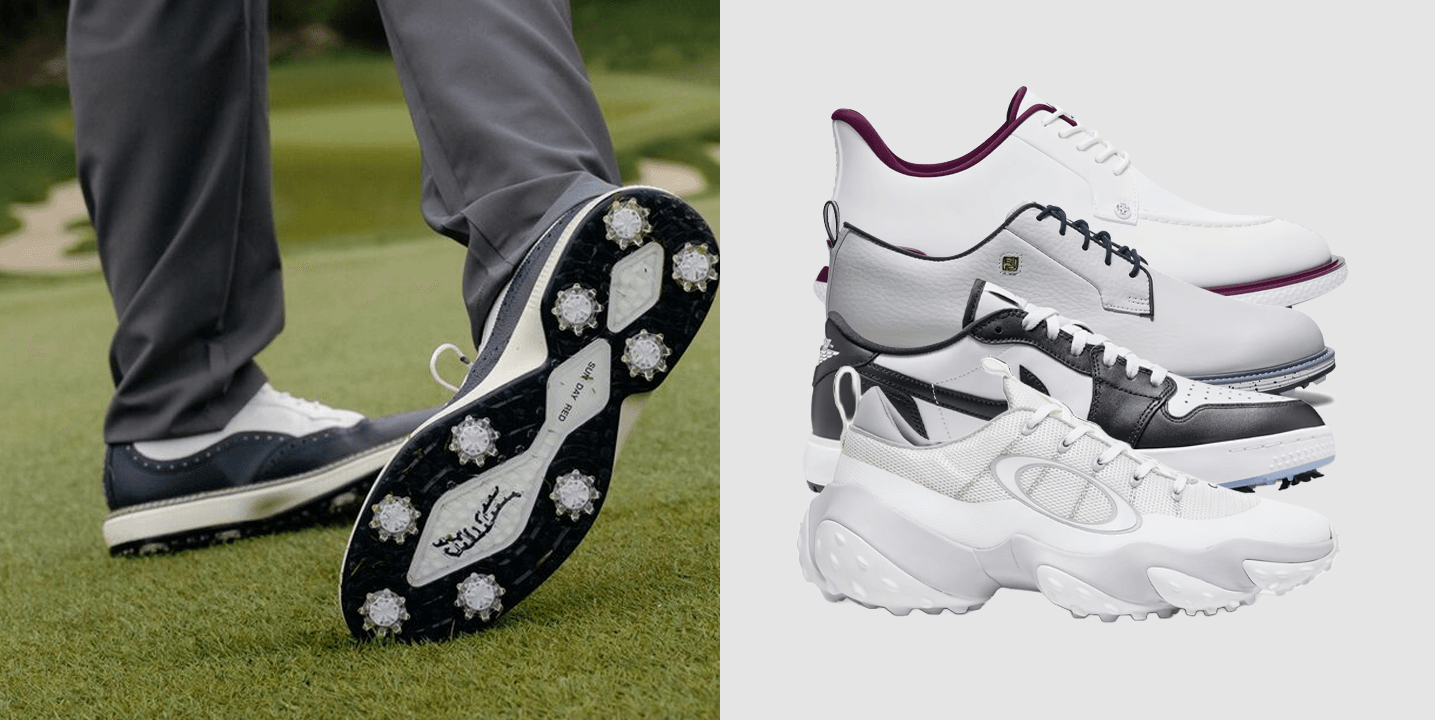
Footwear in golf has exploded. New silhouettes. New stories. New points of view. Narrowing this category down was harder than ever, but these three represented the strongest version of three very different approaches.
Eastside Golf x Nike Air Max Plus G
Eastside Golf and Nike felt like the closing chapter of a long-form story. Out the Mud. 1961. Take Flight. A narrative arc that deserved more attention than it got. The Air Max Plus G paired with Eastside’s cage iconography and that soft blue colorway was bold without being loud. A sneaker first mindset that still respected the course.
Sun Day Red introduced the Pioneer Magnolia as an entirely new silhouette. A modern saddle built to the standards of Tiger Woods. Several colorways landed well, but the opening Magnolia colorway was the strongest statement. Clean. Confident. A clear signal of where the brand wants to go in footwear.
Payntr Golf is on a tear right now. The new name dominating the athletic golf shoe conversation. The Moving Day borrows DNA from the Eighty Seven SC, but pushes comfort even further. Easily the most comfortable shoe I wore this year. Worn by Jason Day on tour, with the Gators moment at Augusta stealing the show.
Campaign of the Year
Manors — Foulweather
Earlier this year I said Manors is building the best brand in golf. Period. That opinion has not changed.
I am obsessive when it comes to clothing, and after more than a decade working in brand marketing, I pay attention to things most people miss. Manors continues to separate itself in two very specific ways. First, their ability to pull you in visually. Second, their ability to connect emotionally without ever forcing the message.
Golf is obsessed with features and benefits. Manors rarely talks about product in that way. If you follow the brand closely, you will notice how little they speak about clothing at all. Instead, they invest in what the brand represents through the lens of golf. Exploration. Curiosity. Adventure. The idea that golf is a reason to go somewhere, not just something to do.
Their greatest advantage is location. Surrounded by some of the most striking and dreamlike golf landscapes in the world, they treat place as part of the product. Foulweather leaned fully into that. Atmosphere over explanation. Feeling over selling.
Then they back it up with the clothes. Thoughtful sportswear that actually performs and looks right doing it. I have been locked in since the rebrand, and this campaign only confirmed it. Manors is special, and they are not slowing down anytime soon.
A Trend I Loved
The Return of Natural Fibers
For a long time, golf chased performance at the expense of touch. Synthetic fabrics pretending to be something they were not. Loud claims. Minimal soul. What stood out this year was a quiet return to real materials and honest construction. Pieces that breathe naturally. Fabrics that age well. Clothing that feels good standing on the first tee and still makes sense when the round is over.
This shift is not about rejecting performance. It is about redefining it. Comfort through texture. Confidence through material choice. Natural fibers bring warmth, depth, and character back into golf wardrobes in a way technical fabrics never quite could.
Texture is having a moment in golf. Not forced. Not disguised. Just real. And it is the most exciting direction the category has taken in years.
New Brand That Won Me Over
Agronomy Workshop
It is almost impossible to talk about golf today without the Covid boom entering the conversation. The explosion was real. Brands, products, people, ideas. All of it. I am genuinely thankful for that moment because it opened the door to creativity across the category. But it also created noise. A lot of it.
Untangling what is new from what is meaningful has become work if you do not know what to look for.
Agronomy Workshop is new and technically part of that noise, but you can skip the diagnosis phase entirely. They are worth your attention.
First, the brand foundation is bulletproof. The team behind the scenes are not rookies. They are experienced storytellers and designers who understand restraint and intention. That matters. One quick look at their social presence tells you everything you need to know. The curation is confident without being precious.
Then there are the details. Shirt tags designed like a putting green, with the hole filled by the correct garment size. Small touches that feel thoughtful and quietly delightful.
Finally, the product. Nothing feels forced. They are taking familiar silhouettes and improving them through careful cut and sew work that makes each piece feel uniquely theirs.
Agronomy Workshop is not chasing attention. They are earning it. Without question, a brand to watch closely heading into 2026.
"NOT FOR GOLF" Standout of the Year
Oakley
I can fully admit it. Oakley stole my heart this year when it comes to golf. And honestly, that started long before they leaned back into the category.
Outside of the sport, I have always been a fan of Oakley. Their design language. Their confidence. Their ability to move seamlessly between sport, culture, and experimentation. Last year, I made multiple pieces of content talking about how badly I wanted to see Oakley fully explore golf through apparel while continuing to push eyewear forward. That curiosity has been rewarded.
The NOT FOR GOLF franchise has become one of the most meaningful parts of what I do day to day. It reinforces a simple truth. What works on the golf course is not limited. It is only limited by your willingness to explore and stay curious. Oakley embodies that mindset better than almost anyone.
They understand how to weave in and out of sport without asking for permission. Collaborations with Metalwood. New eyewear built with Meta. And a rapidly expanding Oakley Golf label that continues to sharpen its point of view.
There is not a week that goes by where I am not checking the site, scrolling global editorials, or paying attention to what Oakley is quietly building. It feels limitless. And for golf, that is exactly the point.
Watch That Caught My Eye
Tissot PRX Titanium 38mm
I will be honest. I did not know much about watches at all. If you scroll my YouTube history, that becomes very obvious very fast. Somewhere along the way, watches quietly joined my never-ending list of interests. Maybe it is maturity. Maybe it is my brain refusing to slow down. Either way, here we are.
I have worn a smartwatch for as long as they have existed. Health tracking, sleep data, the whole thing. I have also worn a Whoop since launch. Making the switch away from that world has been surprisingly refreshing. A full year of learning, reading, and paying attention later, one watch never left my mind.
The Tissot PRX Titanium 38mm has stayed on my radar all year. It is not a performance piece by any means, and that is part of the appeal. Wearing a proper watch on the golf course has its own quiet perks. It starts conversations. It adds intention. It ties an outfit together in a way no screen ever could.
With all of that said, this watch sits at the very top of my list. The Tissot PRX Titanium is my number one wishlist item heading into 2026.
Experience of the Year
Skratch Clubhouse — New York City
2025 had everything if you care about golf. And I mean everything.
Behind-the-scenes access through Full Swing. An indoor league on national television with TGL. Weekly fit checks on the PGA TOUR. Brands raising the bar with editorial and product in a way we have not seen before. Some of the strongest drops the sport has ever had. More places to watch, more reasons to play, and more ways to participate than ever.
The hours I spent on the course went up. Watching golf went up. Talking about golf went up. My list of favorite brands grew. Yes, my closet did too.
There is always talk about the golf bubble popping. In my world, that conversation feels distant. Not because it is wrong, but because it does not reflect what is actually happening behind the scenes. The relationships. The access. The ideas being built quietly. None of that suggests slowdown. If anything, it suggests momentum.
Most of those conversations live in DMs, on my podcast, or in rooms you do not always see. They move fast. They are fluid. They can feel abstract.
The Skratch Clubhouse made it real.
Set in New York City during the Ryder Cup, the Clubhouse became a physical expression of everything that has been building over the past few years. A space filled with brands I genuinely love, voices I deeply respect, and fans who care about golf as culture, not just competition. What started as a loose idea during one tournament turned into a living space in a matter of months.
It was honest. It was human. It felt like community, not content.
Hands down one of my favorite golf experiences I have ever been part of. And the most exciting part is knowing it was not a peak. It was proof.
2025 was legit. In every sense of the word. The looks, the stories, the people, the energy. It all showed up. And if this year proved anything, it is that golf is still finding new ways to surprise us. 2026 feels wide open. In the best way.

JOIN OUR NEWSLETTER
Get our top stories in your inbox, including the latest drops in style, the need-to-know news in pro golf, and the latest episodes of Skratch’s original series.