Gear & Equipment
3 MIN READ
September 29, 2026
The Science Behind Boosted Driver Distance In Utah
Don't believe everything you've heard about why golf balls fly farther at altitude because we've got the real science to help you understand the facts.

After a crazy week of match play at the Presidents Cup, the PGA Tour is back in action this week for the Bank of Utah Championship, held at Black Desert Resort.
Beyond being a beautiful setting for golf, Black Desert is located just a couple of miles from St. George, Utah. On the surface, this might seem like a mere footnote, but when you realize it sits nearly 3,000 feet above sea level, we need to start discussing the science of ball flight.
How Elevation Affects Ball Flight & Distance
The higher the elevation, the easier it is to hit the golf ball farther, but unlike in space, the gains aren't caused by a lack of gravity; they're caused by atmospheric changes that occur as you rise above sea level.
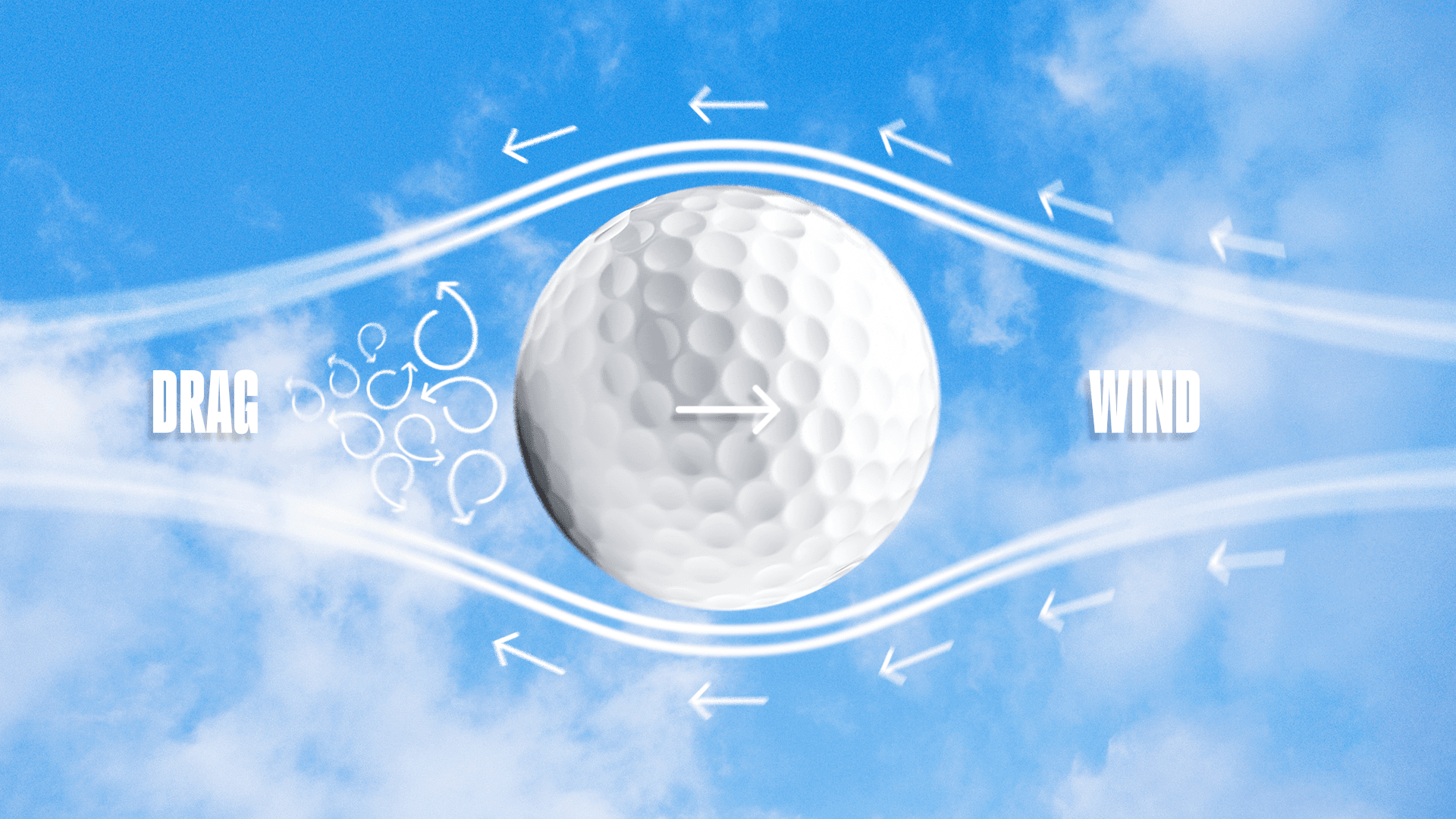
The main reason is that the air is thinner or, as the meteorologists might say, less dense. With the air being less dense there is less resistance to the ball, meaning it decelerates slower.
It should also be noted that contrary to what you might hear from some golf commentators, the golf ball does NOT spin less at higher altitudes, it's just the air has less of an effect on the ball. An easy way to think about it is a golf ball simply reacts to the launch conditions that are created from impact. After that aerodynamics take over. In a way, it's no different than hitting a putt. Once you have selected your aim spot and hit your speed, it's all up to gravity and friction after that.

Titleist ProV1 Golf Balls (Dozen)
$58
BUY NOW*Every product is independently selected by editors. Things you buy through our links may earn us a commission.
How The Math Math's Out
With the help of the folks over at Titleist (I trust their golf ball science to a very high level) and their principal scientist of golf ball R&D, Steve Aoyama, you can quickly and easily calculate the average percentage of distance gain possible based on your elevation.
You can calculate the distance gain you will experience (compared to sea level) by multiplying the elevation (in feet) by .00116. For example, if you’re playing in Reno, at 1 mile elevation (5,280 ft.), the increase is about 6% (5,280 x .00116 = 6.1248). If you normally drive the ball 250 yards at sea level, you will likely drive it 265 yards in Reno.
This means that for those golfers playing at Black Desert Resort this week at close to 3000 feet, they will experience just over a 3% gain in distance off the tee. Now that might not sound like much, but when you consider how many players can quite easily carry the ball close to 300 yards, an extra 10 yards can be the difference between carrying a bunker, or lava rock in the case of the course this week or not.
As for carry, last year's Bank of Utah champion Michael Brennan, let's just say he was enjoying the elevation.

JOIN OUR NEWSLETTER
Get our top stories in your inbox, including the latest drops in style, the need-to-know news in pro golf, and the latest episodes of Skratch’s original series.